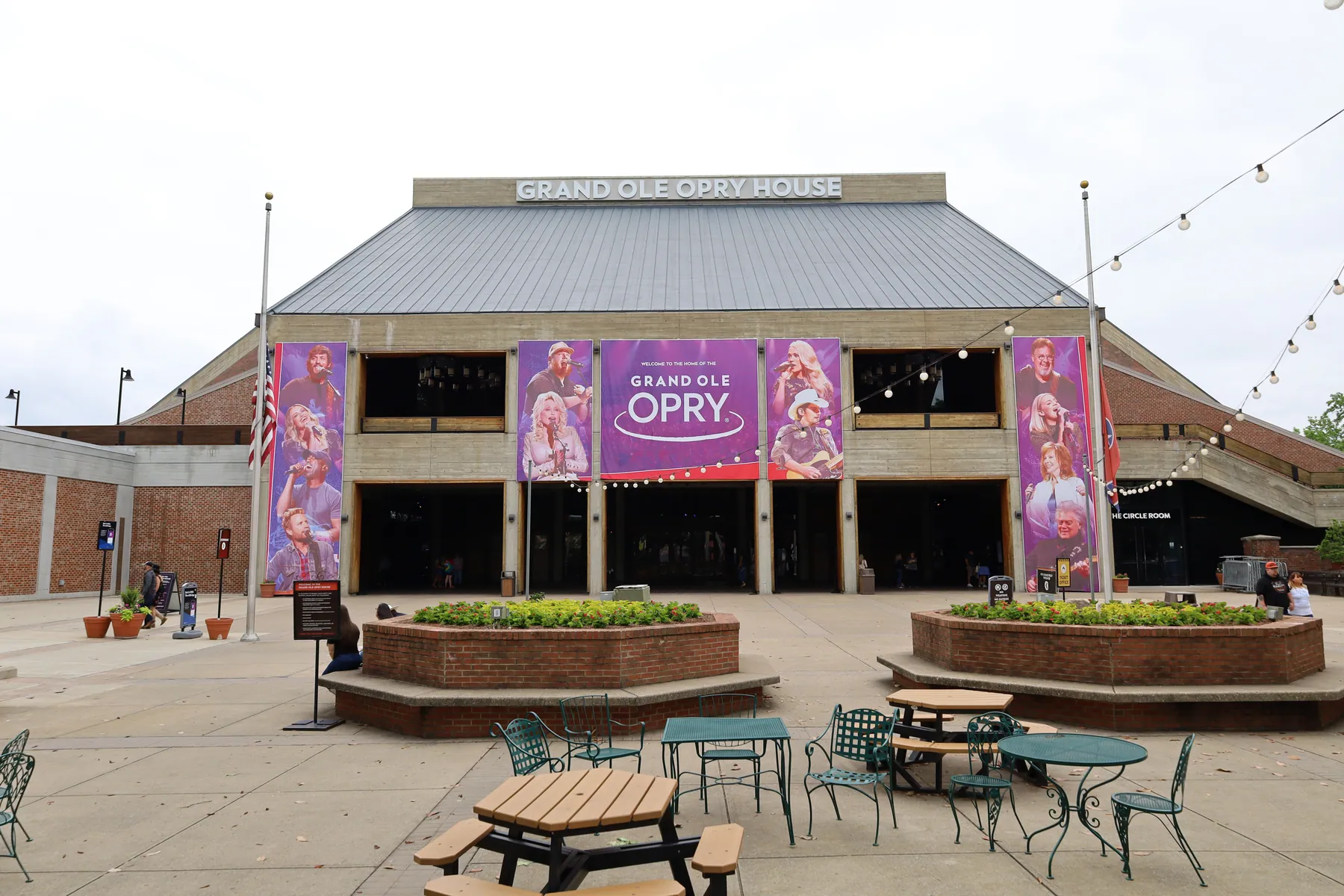
Grand Ole Opry
The Grand Ole Opry is the country music radio show that has gone out live since 1925, staged at the Grand Ole Opry House on Opry Mills Drive, east of downtown. It turned 100 in 2025, and the Opry House is about 7.3 miles from the lofts.
A radio show first
The Opry began on November 28, 1925, as the WSM Barn Dance, created by George D. Hay in a studio at the National Life & Accident Insurance Company. It took the name Grand Ole Opry in 1927, when Hay introduced it following a classical music program. It is the longest-running radio broadcast in U.S. history and still airs live on 650 AM WSM.
About 74 active members perform on it regularly. The Opry marked its 100th anniversary in 2025, including a show at the Royal Albert Hall in London.
Its homes over 100 years
The Ryman Auditorium, at 116 Rep. John Lewis Way North downtown, still hosts the Opry for winter runs, and Tootsie's Orchid Lounge, the bar its performers used in the Ryman years, is right behind it on Broadway.
- 1925-1934: National Life studio
- 1934-1936: Hillsboro Theatre
- 1936-1939: Dixie Tabernacle
- 1939-1943: War Memorial Auditorium
- 1943-1974: Ryman Auditorium
- 1974-today: Grand Ole Opry House
The Opry House and the circle
The Opry House opened on Saturday, March 16, 1974, as a 4,000-seat hall. President Richard Nixon attended the first night and played the piano. To carry the old stage into the new building, a six-foot circle of oak was cut from the corner of the Ryman's stage and set into center stage, where it remains.
In May 2010 the Cumberland River flooded the building, covering the main-floor seats, the backstage areas and the stage. The show moved to the Ryman and other Nashville venues for the summer and returned to the Opry House on September 28, 2010, with the circle restored. The hall sits beside Briley Parkway nine miles east of downtown, in the same complex as the Opryland Hotel and the Opry Mills shopping center.
Show nights and tours
The Opry House is the main home for Tuesday, Friday and Saturday shows, with some Wednesday and Sunday dates. Each winter the Opry spends part of the season back at the Ryman Auditorium: it did three-month winter runs there from 1999 through 2020 and shorter ones since 2023, so check which building your tickets are for.
Backstage tours come in several kinds: a daytime tour of about 50 minutes, a post-show tour of about an hour, a 90-minute VIP tour for small groups and a 45-minute Women of Country tour. Depending on the tour you see dressing rooms, the WSM radio studio, Opry memorabilia and the Opry Legends exhibit, and stand on the stage when it is free.
Getting there from the lofts
The Opry House is about 7.3 miles from the lofts, roughly 9 minutes by car when the highway is clear. It is outside downtown, so plan on a car or a rideshare, and leave extra time on show nights.
Questions
Is the Opry at the Opry House or the Ryman?
Mostly at the Grand Ole Opry House on Opry Mills Drive. In winter it runs shorter seasons at the Ryman Auditorium downtown, so check your ticket.
Can I tour backstage at the Opry?
Yes. There are daytime, post-show, VIP and Women of Country tours, from about 45 to 90 minutes.
Can I listen on the radio?
Yes. The Opry airs live on 650 AM WSM.
How far is the Opry from Union Street Lofts?
About 7.3 miles, roughly 9 minutes by car in light traffic.
Sources
- Grand Ole Opry, official site
- Grand Ole Opry, backstage tours
- Grand Ole Opry, Wikipedia
- Grand Ole Opry House, Wikipedia
Checked October 6, 2026.
Photo: Antony-22, CC BY-SA 4.0, via Wikimedia Commons. Cropped.
More things to do
All 60Gibson Garage
Gibson Garage is Gibson's guitar showroom at 209 10th Avenue South, the address of Cummins Station, the old warehouse where Gibson moved its headquarters in 2019.
Third Man Records
Third Man Records is Jack White's record label, and its Nashville building on Seventh Avenue South holds a record store, the label's offices, a live room that can cut a show straight to vinyl and a 1947 record-your-own booth.
RCA Studio B
RCA Studio B is the 1957 Music Row studio where Elvis Presley, Dolly Parton, Roy Orbison and the Everly Brothers made records, and where the Nashville Sound took shape.