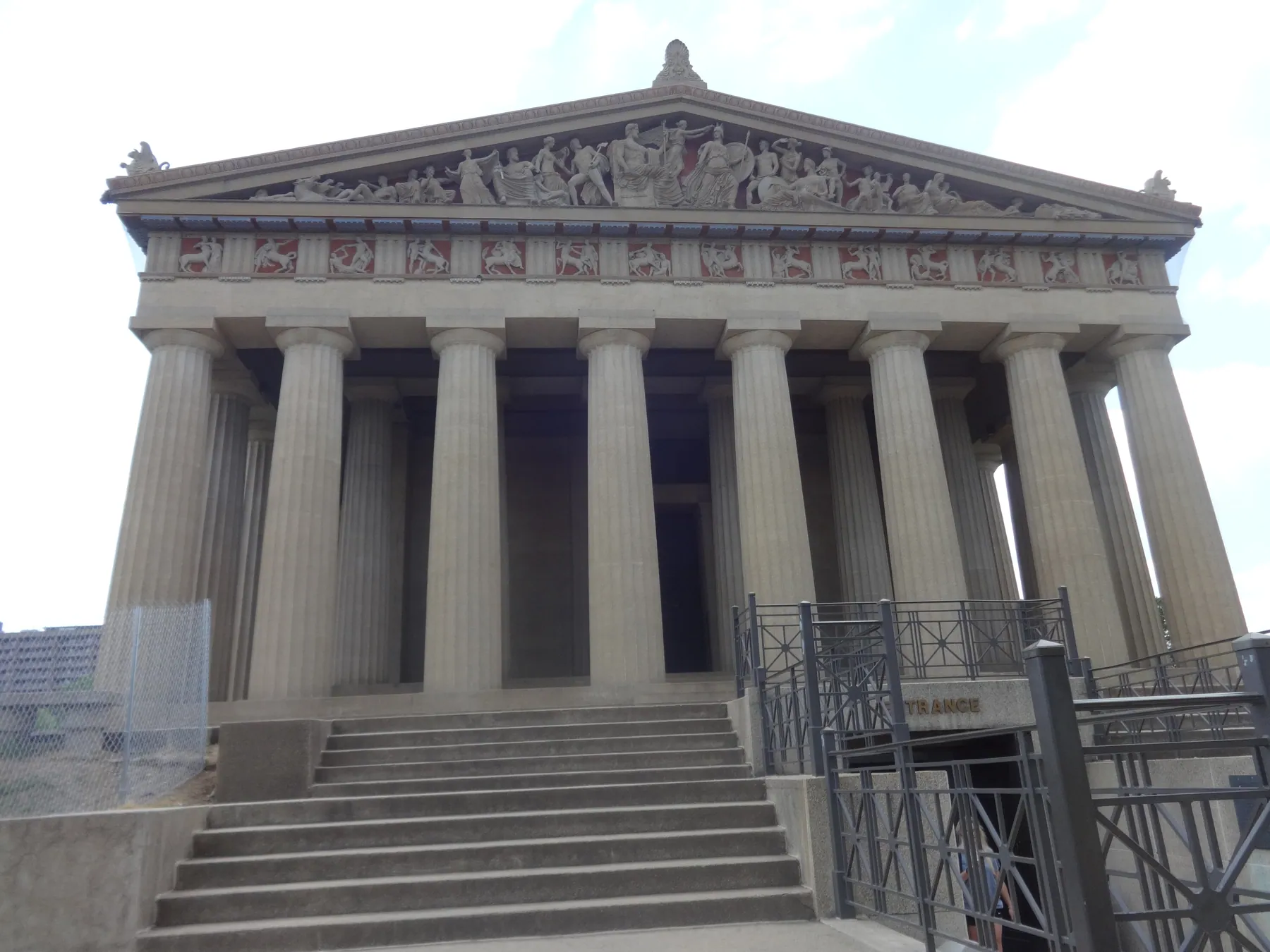
The Parthenon and Centennial Park
Nashville's Parthenon is a full-size replica of the temple in Athens, built for the 1897 Tennessee Centennial Exposition and rebuilt in concrete in the 1920s. It stands in Centennial Park, a 132-acre city park on West End Avenue, and holds a city art museum and a 42-foot statue of Athena. From the lofts it is about 2.8 miles, roughly 7 minutes by car.
From fair building to permanent replica
The Parthenon was the Fine Arts Building of the Tennessee Centennial Exposition, a world's fair held from May 1 to October 30, 1897, that drew about 1.8 million people. Every exposition building was meant to be temporary, and this one was made of plaster, wood and brick. When the fair ended, Nashville kept it as the centerpiece of the empty grounds.
The plaster did not last. In 1920 the city decided to rebuild in permanent materials and hired local architect Russell Hart. The new roof, walls and load-bearing columns were reinforced concrete, and the surfaces and sculpture were cast concrete aggregate. The exterior was finished by 1925 and the interior by 1931, when the building reopened as a city museum on May 20, 1931. The Parthenon describes itself as the world's only exact-size replica of the original temple, down to the slight curve of its horizontal lines and the inward lean of its columns.
Athena and the galleries
In 1982 the Park Board commissioned Nashville sculptor Alan LeQuire to recreate the Athena Parthenos for the main hall. The 42-foot statue took almost eight years and was unveiled on May 20, 1990. Gilding and painting were completed in 2002 with more than 8 pounds of gold leaf.
Athena stands in the naos, the east room, which is 93 feet long and 63 feet wide. The building is 65 feet high at its peak and ringed by 46 Doric columns. Downstairs, the galleries hold the museum's art collection, which started with 63 paintings by 19th- and 20th-century American artists donated by James M. Cowan between 1927 and 1929. The building also displays plaster casts of the original Parthenon sculptures.
Centennial Park
Centennial Park was created in 1902 from much of the old exposition grounds, which had earlier been the Cockrill family farm, state fairgrounds after the Civil War and, from 1884 to 1895, a racetrack called West Side Park. The park is listed on the National Register of Historic Places.
Inside the park you will find a one-mile walking trail, Lake Watauga (an artificial lake dug for the exposition), a sunken garden, a band shell, the Centennial Art Center, sand volleyball courts and a dog park. The Tennessee Woman Suffrage Monument, also by Alan LeQuire, was unveiled outside the Parthenon in 2016. The nonprofit Centennial Park Conservancy presents free concerts at Musicians Corner that it says draw about 75,000 people a year. Parts of the park are under construction as part of a master plan, so check the park map before you go.
- One-mile walking loop around the park
- Lake Watauga and the sunken garden
- Musicians Corner free concerts (seasonal)
- Tennessee Woman Suffrage Monument
Before you go
Tickets are sold only at the Ticket Counter or Museum Store inside the building, and the museum says the line usually moves in 10 to 15 minutes. No food or drink is allowed in the museum, including water, and backpacks, large bags, luggage, bikes and scooters are not permitted. A small number of free lockers are available. Photography is welcome except at one marked case.
The museum says a typical visit takes about 60 minutes. Visits are self-guided, with free docent programs during the day. Groups of 10 or more need a reservation made at least 30 days ahead, which matters if you are bringing a large party from the lofts. Hours change for holidays and school programs, so check current hours on the Parthenon's site.
Questions
Do I need to buy Parthenon tickets in advance?
No. Tickets are sold only on site, at the Ticket Counter or in the Museum Store. On busy days the line can extend outside the building.
How long should we plan for the Parthenon?
The museum says most visitors spend about an hour inside. Add time if you want to walk the one-mile loop in Centennial Park or sit by Lake Watauga.
Can a large group from all four lofts visit together?
Yes, but adult and student groups of 10 or more need a reservation made at least 30 days in advance. Request it through the Parthenon's group visit form or email tours@parthenon.org.
Sources
- The Parthenon, Mission and History
- The Parthenon, FAQs
- The Parthenon, Centennial Park
- Centennial Park Conservancy
- Wikipedia, Parthenon (Nashville)
- Wikipedia, Centennial Park (Nashville)
Checked October 6, 2026.
Photo: Michael Rivera, CC BY-SA 4.0, via Wikimedia Commons. Cropped.
More things to do
All 60Belle Meade Historic Site and Winery
Belle Meade was a plantation and thoroughbred horse farm founded by John Harding in 1807 that grew to 5,400 acres.
Cheekwood Estate and Gardens
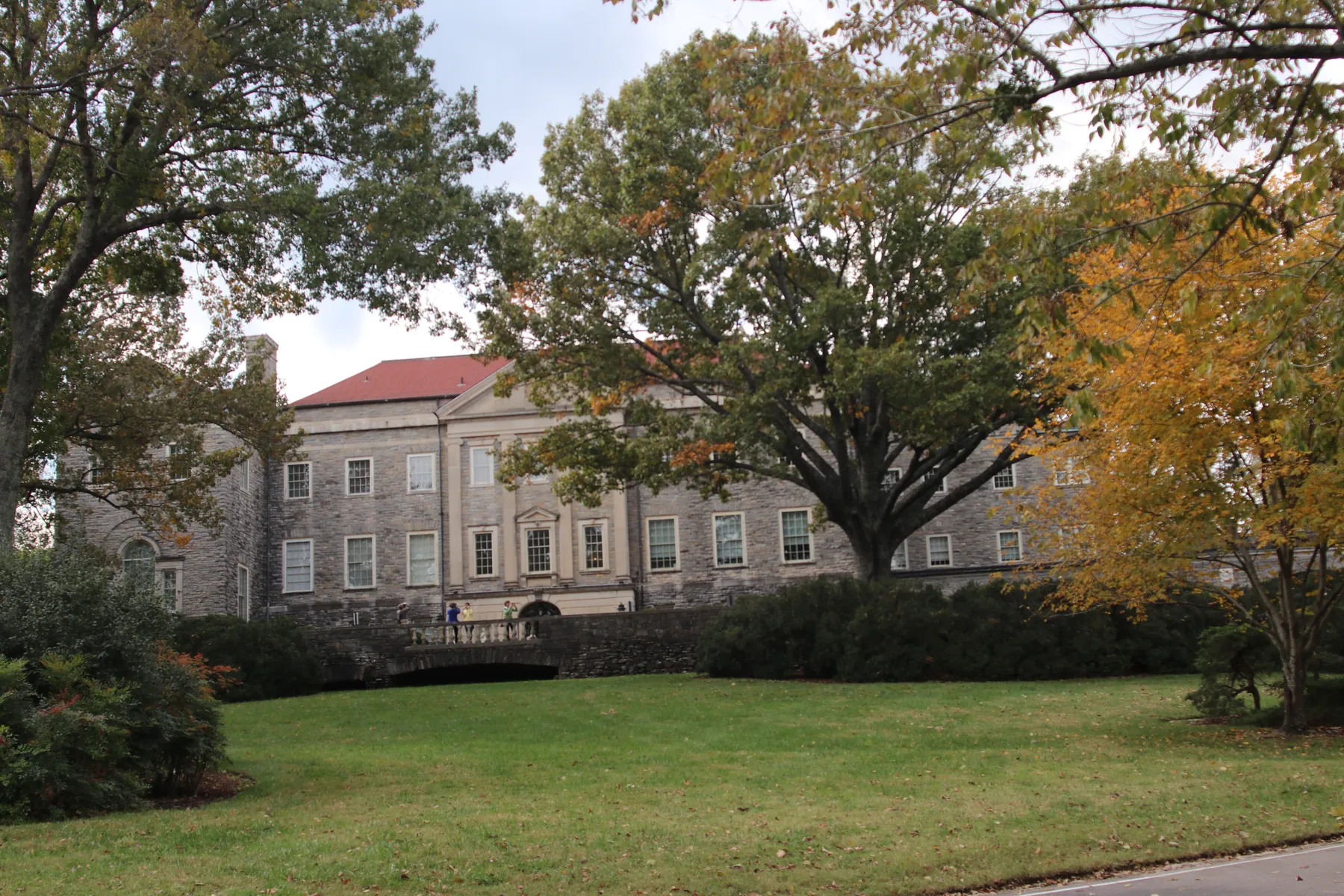
Cheekwood is a 55-acre estate on Nashville's west side where a limestone mansion built with Maxwell House coffee money now holds an art museum, surrounded by botanical gardens and an outdoor sculpture trail.
Andrew Jackson's Hermitage
The Hermitage was the home of Andrew Jackson, the seventh president, from 1804 until he died there in 1845.