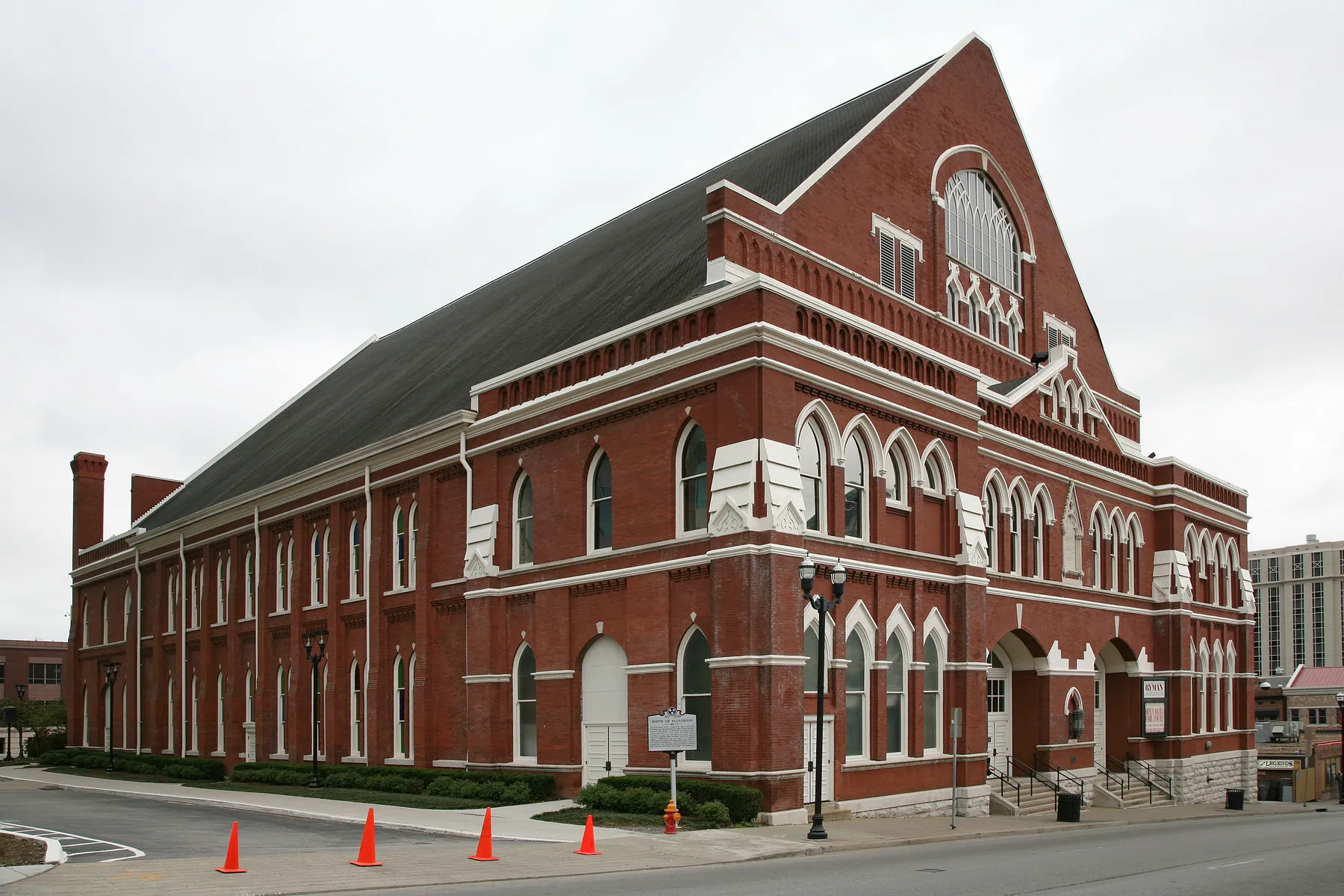
Ryman Auditorium
The Ryman Auditorium is the brick hall on Rep. John Lewis Way North, half a block above Broadway, that housed the Grand Ole Opry from 1943 to 1974. It is still a working concert hall, seated on its original wooden pews, and during the day you can tour the building and have your photo taken on its stage.
Built as a tabernacle
Thomas Ryman was a Nashville riverboat captain who was converted by the revival preacher Sam Jones, who held a tent revival in the city in 1885. Ryman set out to build a large tabernacle for religious gatherings, and the Union Gospel Tabernacle opened in 1892. Its first big event was the May Music Festival, May 4 to 7, 1892, with the Theodore Thomas Orchestra.
Ryman died on December 23, 1904, and the hall was renamed the Ryman Auditorium in his honor. Lula Naff was officially recognized as the hall's manager in 1920. The building was designed by architect Hugh Cathcart Thompson.
The Opry years
The Grand Ole Opry moved into the Ryman in 1943 and broadcast from its stage until March 15, 1974. Those 31 years earned the building its nickname, the Mother Church of Country Music.
In 1945 Earl Scruggs made his Opry debut on this stage with Bill Monroe's Bluegrass Boys, a lineup the Ryman credits with setting the prototype for bluegrass music.
Closing and coming back
The Opry moved to its new house in 1974. In 1991, Emmylou Harris recorded Live at the Ryman over three nights, April 30 to May 2, which helped renew interest in the hall. Gaylord Entertainment began renovations in 1989, and after a major renovation the Ryman reopened in June 1994 as a concert hall and museum. A $14 million expansion followed in 2015.
The Ryman was listed on the National Register of Historic Places in 1971, named a National Historic Landmark on June 25, 2001, and named a Rock & Roll Hall of Fame Landmark in 2022. The Opry has returned for winter runs at the Ryman since 1999. Recent decades have brought acts from Bob Dylan and Ringo Starr to Harry Styles and Wu-Tang Clan.
Touring the building
The self-guided tour lets you go at your own pace through the exhibits. It includes:
- A souvenir photo taken on the stage, when the stage is available.
- The Soul of Nashville theater show about the building's story.
- Exhibits on Opry 100, the Opry's centennial, and on unexpected guests the hall has hosted, from Harry Houdini to Clint Eastwood.
- Rock & Roll Hall of Fame artifacts and a gallery of signed Hatch Show Print posters.
Backstage tour and shows
The guided backstage tour runs about 1.5 hours: 45 minutes with a guide in the dressing rooms and backstage areas, then 45 minutes on your own. Backstage access depends on the day's event schedule.
For a show, the hall seats 2,362, and the seating is still the original wooden pews. Buy concert and tour tickets through the Ryman's own website.
Questions
Can you tour the Ryman without seeing a show?
Yes. There is a self-guided daytime tour with exhibits and a stage photo, and a guided backstage tour of about 1.5 hours. Tickets are sold on the Ryman's website.
Are the seats really church pews?
Yes. The Ryman was built as a gospel tabernacle, and its original wooden pews are still used for concerts.
Does the Grand Ole Opry still play at the Ryman?
The Opry's home has been the Grand Ole Opry House since 1974, but it has returned to the Ryman for winter runs since 1999. Check the Opry schedule for current dates.
Sources
- Ryman Auditorium history, official site
- Ryman Auditorium tours, official site
- Ryman Auditorium, Wikipedia
Checked October 6, 2026.
Photo: Daniel Schwen, CC BY-SA 4.0, via Wikimedia Commons. Cropped.
More things to do
All 60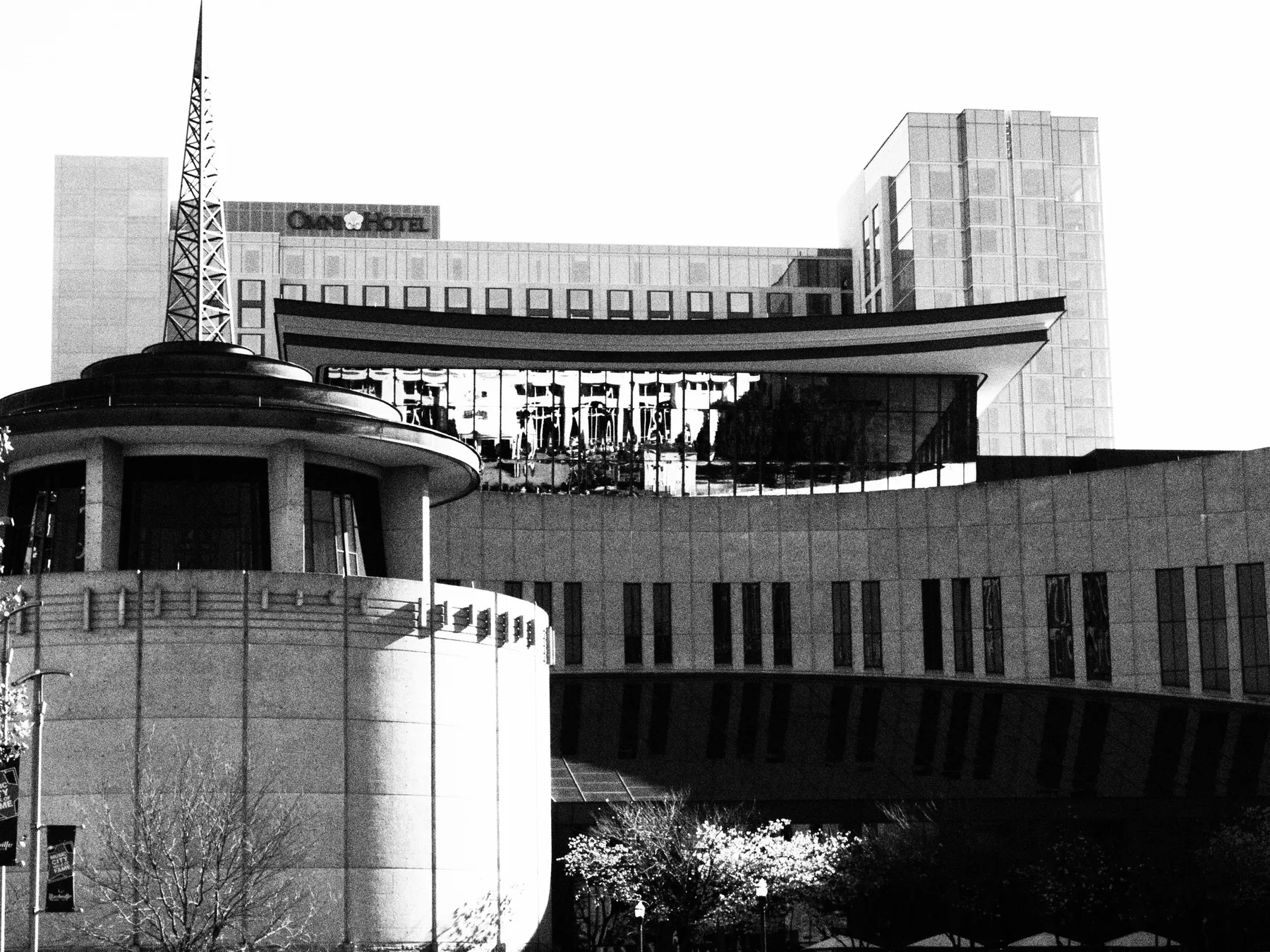
Country Music Hall of Fame and Museum
The Country Music Hall of Fame and Museum is the large building on Rep.
Hatch Show Print
Hatch Show Print is a working letterpress shop that has printed show posters in Nashville since 1879.
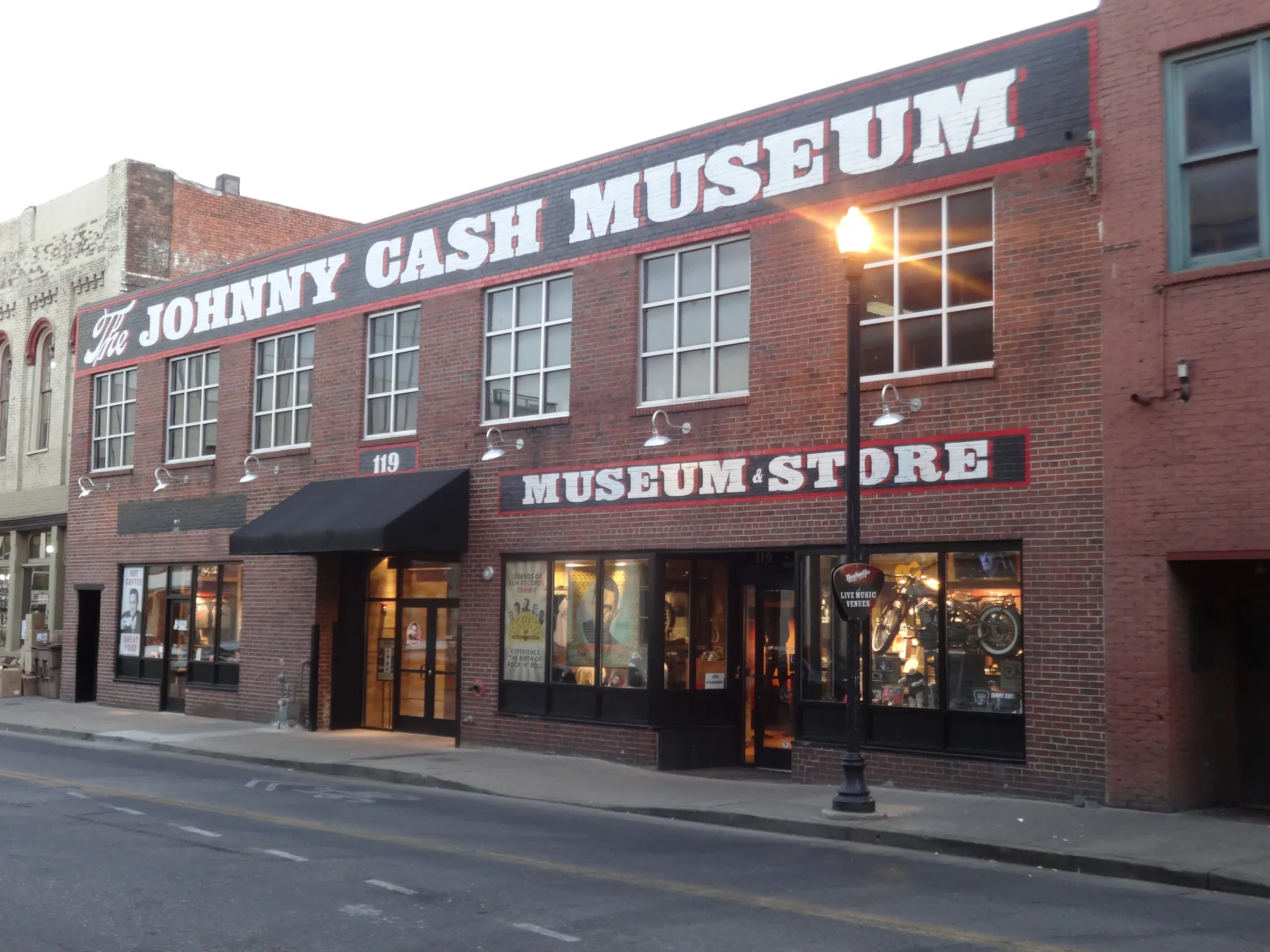
Johnny Cash Museum
The Johnny Cash Museum, at 119 Third Avenue South just off Broadway, grew out of the personal collection of Bill and Shannon Miller, who were friends of Cash.