Music Row
Music Row is the district along 16th and 17th Avenues South, southwest of downtown, where Nashville's record labels, publishers and studios have clustered since 1954. Most of its buildings are working offices, so a visit means the Historic RCA Studio B tour, the Musica statue and a walk past the studios.
Getting there
The Musica statue at the Music Row Roundabout is about 1.5 miles from the lofts, a 30-minute walk or a few minutes by car. To get inside RCA Studio B, book the tour through the Country Music Hall of Fame and Museum at 222 Rep. John Lewis Way South; Studio B tours leave from the museum, about a 12-minute walk from the lofts.
How Music Row started
The district began in 1954, when the first commercially successful recording studios and music offices opened along 16th Avenue South. That year, brothers Harold and Owen Bradley opened Bradley Studios, later nicknamed the Quonset Hut, the first commercial recording studio in what became Music Row. It produced hits for Johnny Cash, Patsy Cline, Brenda Lee and Marty Robbins. The Bradleys sold it to Columbia Records in 1962. Record executive Mike Curb bought and restored it in 2006, and it is now a recording classroom for Belmont University.
By the late 1960s, RCA Victor, Decca and Columbia were cutting most of their country sessions here. The street became a mix of converted houses and new office buildings. The first Country Music Hall of Fame stood at Music Square East and Division Street from April 1967 to December 2000, before the museum moved downtown in 2001.
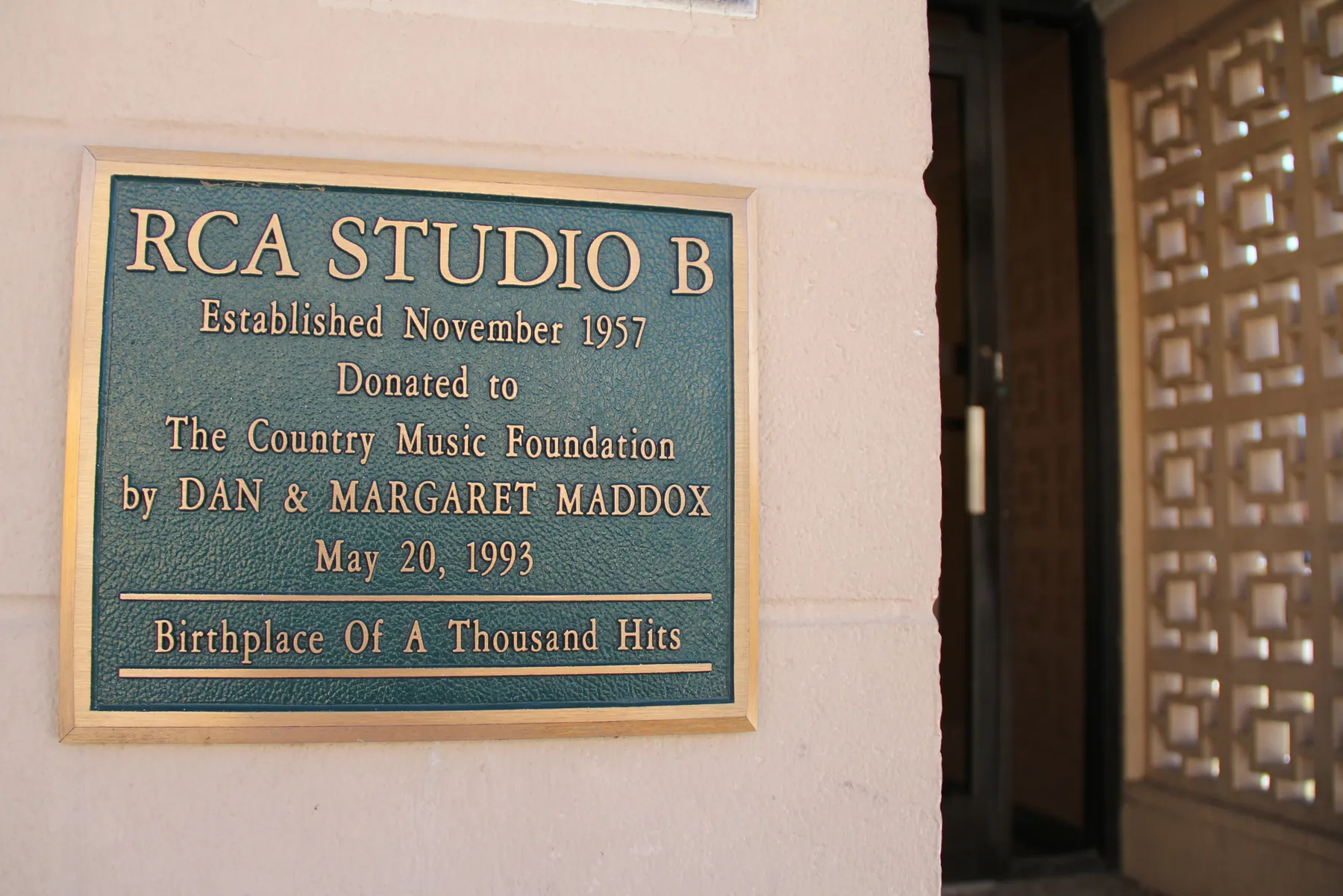
RCA Studio B
Steve Sholes and Chet Atkins established RCA Victor's studio in 1957; it became Studio B in 1965, when RCA built the larger Studio A next door. In its two decades of operation it produced 60 percent of Billboard's country chart hits and helped create the polished style known as the Nashville Sound. More than 47,000 songs were recorded here, including more than 200 by Elvis Presley; Visit Music City notes that his recording of How Great Thou Art was made here. Dolly Parton wrote that she drove her new car into the side of the building on her way to her first session in October 1967.
The studio closed in 1977. Today the Country Music Hall of Fame runs it with daily scheduled tours, and it was listed on the National Register of Historic Places in 2012.
Musica and Owen Bradley Park
Musica, unveiled in 2003, stands in the middle of the roundabout where Division Street, Demonbreun Street, 16th Avenue South and Music Square East meet. Sculptor Alan LeQuire's group of nine bronze dancers rises about 38 feet and weighs about 10 tons. Across from it, the small Owen Bradley Park has a life-size bronze of Bradley at a piano. Demonbreun Street, leading back toward downtown, has been redeveloped with restaurants and bars.
When to go
Take the Studio B tour by day, then walk the Row and see Musica in daylight for photos. Most studios are private businesses, so look from the sidewalk. Demonbreun Street is the place to stay for dinner or a drink.
Questions
Can you go inside the studios on Music Row?
Most are private businesses. Historic RCA Studio B is the one open for public tours, booked through the Country Music Hall of Fame and Museum.
Where is the Musica statue?
In the Music Row Roundabout, where Division Street, Demonbreun Street, 16th Avenue South and Music Square East meet, about 1.5 miles from the lofts.
Did Elvis record on Music Row?
Yes. Elvis Presley recorded more than 200 songs at RCA Studio B.
Sources
- Music Row, Wikipedia
- RCA Studio B, Wikipedia
- Quonset Hut Studio, Wikipedia
- Musica (sculpture), Wikipedia
- Country Music Hall of Fame and Museum, Know Before You Go
- Visit Music City, Music Row and Demonbreun
Checked October 6, 2026.
Photo: The Erica Chang, CC BY 3.0, via Wikimedia Commons. Cropped.
More neighborhoods
All 16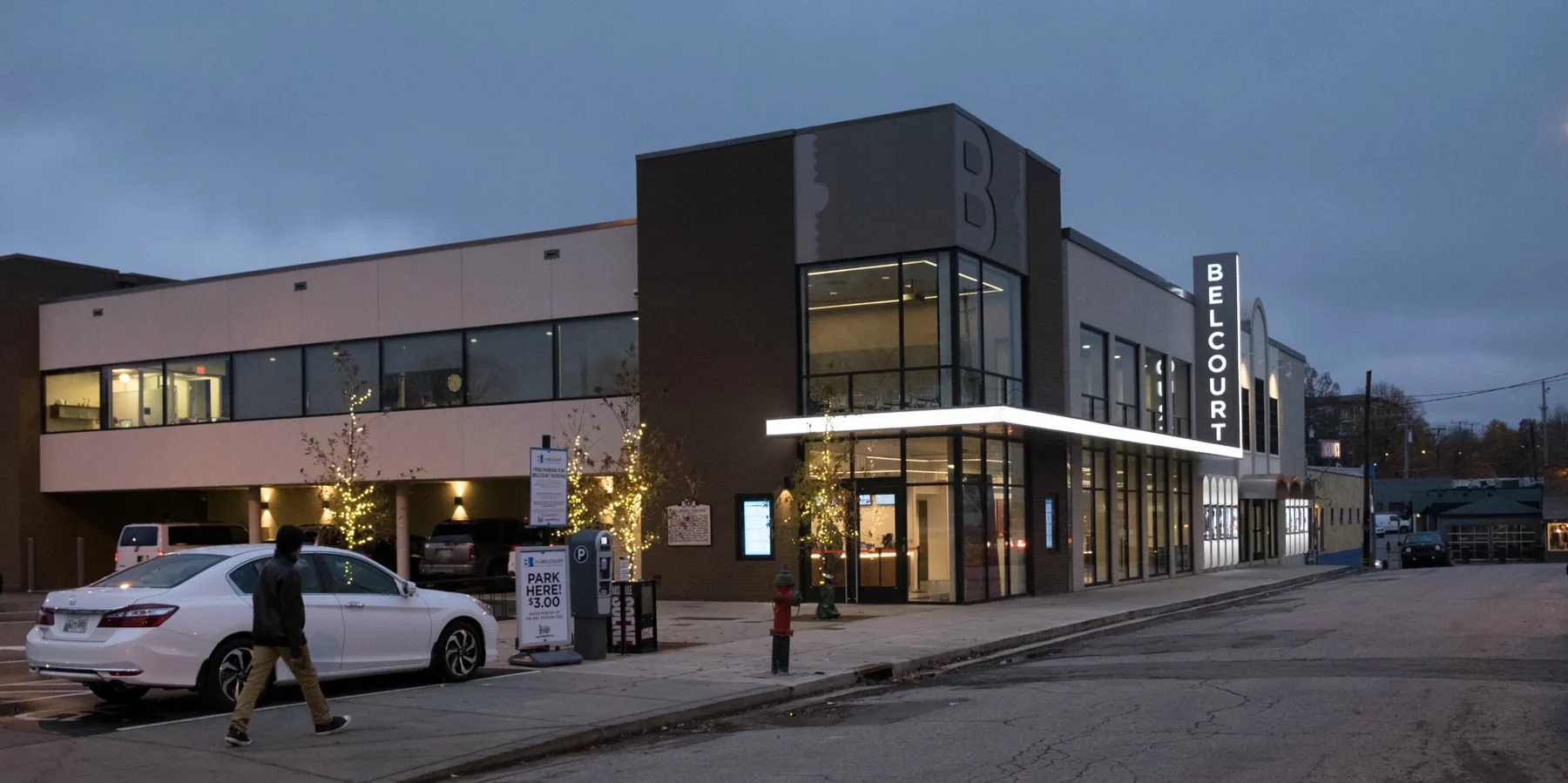
Hillsboro Village
Hillsboro Village is a few blocks of shops, cafés and independent restaurants on 21st Avenue South, between Vanderbilt and Belmont universities, about 3 miles southwest of downtown.
Belmont-Hillsboro
Belmont-Hillsboro is the residential historic district east of 21st Avenue South, next to Belmont University and the Belmont Mansion, the largest house built in Nashville before the Civil War.
Wedgewood-Houston
Wedgewood-Houston, or WeHo, sits a few blocks south of downtown and has filled with art galleries, studios, workshops, distilleries, breweries and restaurants.