Bicentennial Capitol Mall State Park
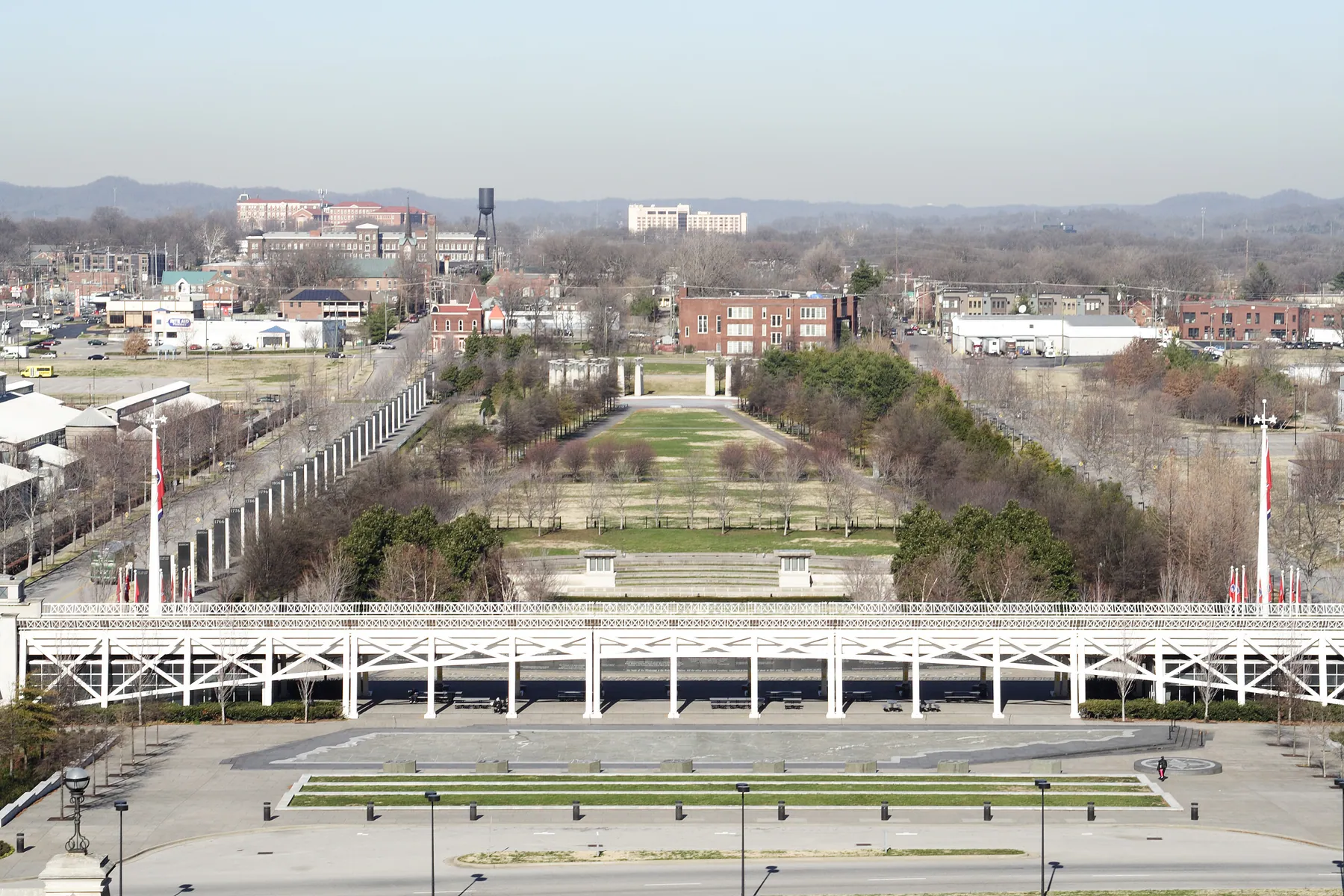
Bicentennial Capitol Mall State Park is a 19-acre park that runs north from the foot of the State Capitol, opened in 1996 for Tennessee's 200th birthday. It packs the state's history and geography into one long walk: a granite map, 31 fountains for the state's rivers, a 95-bell carillon and a World War II memorial. The Tennessee State Museum and the Nashville Farmers' Market sit along its edges.
Why it is here
The park was dedicated on June 1, 1996, the 200th anniversary of Tennessee's statehood. Tuck Hinton Architects, with SSOE Engineers and Ross/Fowler Landscape Architects, drew up the master plan in 1992 and 1993, and the final construction cost was $51 million.
The land has a long history. French Lick Creek and its springs drew Native Americans and early settlers here. The area later became known as Sulphur Bottoms, fell into disrepair and was used as a dump, and its buildings were cleared under urban renewal funded by the Housing Act of 1949.
What to see
Most of the park's features tell a piece of the state's story. The main ones:
- Court of Three Stars: a circular plaza of red, white and blue granite laid out as the three stars on the state flag, one for each of Tennessee's Grand Divisions.
- Granite map: a 200-by-50-foot map of Tennessee in green granite showing its cities, counties and rivers.
- Pathway of History: four-foot walls that chronicle events from 1766 to 1996, with a shorter section on prehistory.
- Walkway of Counties: time capsules from each county, to be opened on the state's tricentennial, June 1, 2096.
- Rivers of Tennessee Fountains: 31 geyser-style fountains, one for each major river and waterway, which also work as a splash pad.
- Carillon: 95 bells for Tennessee's 95 counties, set among 50 columns. It plays an arrangement of the Tennessee Waltz every hour, followed by the time.
World War II Memorial and the trestle
The World War II Memorial is a plaza with 10 pillars showing Tennessee's role in the war, a movable 18,000-pound granite globe held up by water, and gold stars honoring the 5,731 Tennesseans who died in the war.
A 300-foot steel railroad trestle carries a CSX main line across the park, with Greek Revival limestone bridges at each end marked 1796 and 1996. There is also a 2,200-seat terraced amphitheater, patterned on classical Greek and Roman theaters, used for special events.
Along the edges
The Tennessee State Library and Archives opened its building at the park's northeast corner on April 13, 2021. The Tennessee State Museum, which has free admission, is at the corner of Rosa L. Parks Boulevard and Jefferson Street.
The Nashville Farmers' Market, at 900 Rosa L. Parks Boulevard, runs year-round with outdoor Farm Sheds for produce and local goods, an indoor Market House food hall and a garden center. The museum and the market share a free parking lot.
Questions
What is next to Bicentennial Capitol Mall?
The Tennessee State Capitol sits above its south end. The Tennessee State Museum, the Tennessee State Library and Archives and the Nashville Farmers' Market are along its edges.
Can kids play in the fountains?
The 31 Rivers of Tennessee Fountains work as a splash pad, spraying columns of water to different heights.
When does the carillon play?
The 95-bell carillon plays an arrangement of the Tennessee Waltz every hour, followed by a chime of the time, plus other state songs during the day.
Sources
- Bicentennial Capitol Mall State Park, Wikipedia
- Nashville Farmers' Market, official site
- Visit, Tennessee State Museum
Checked October 6, 2026.
Photo: Thegreenj, CC BY-SA 3.0, via Wikimedia Commons. Cropped.
More things to do
All 60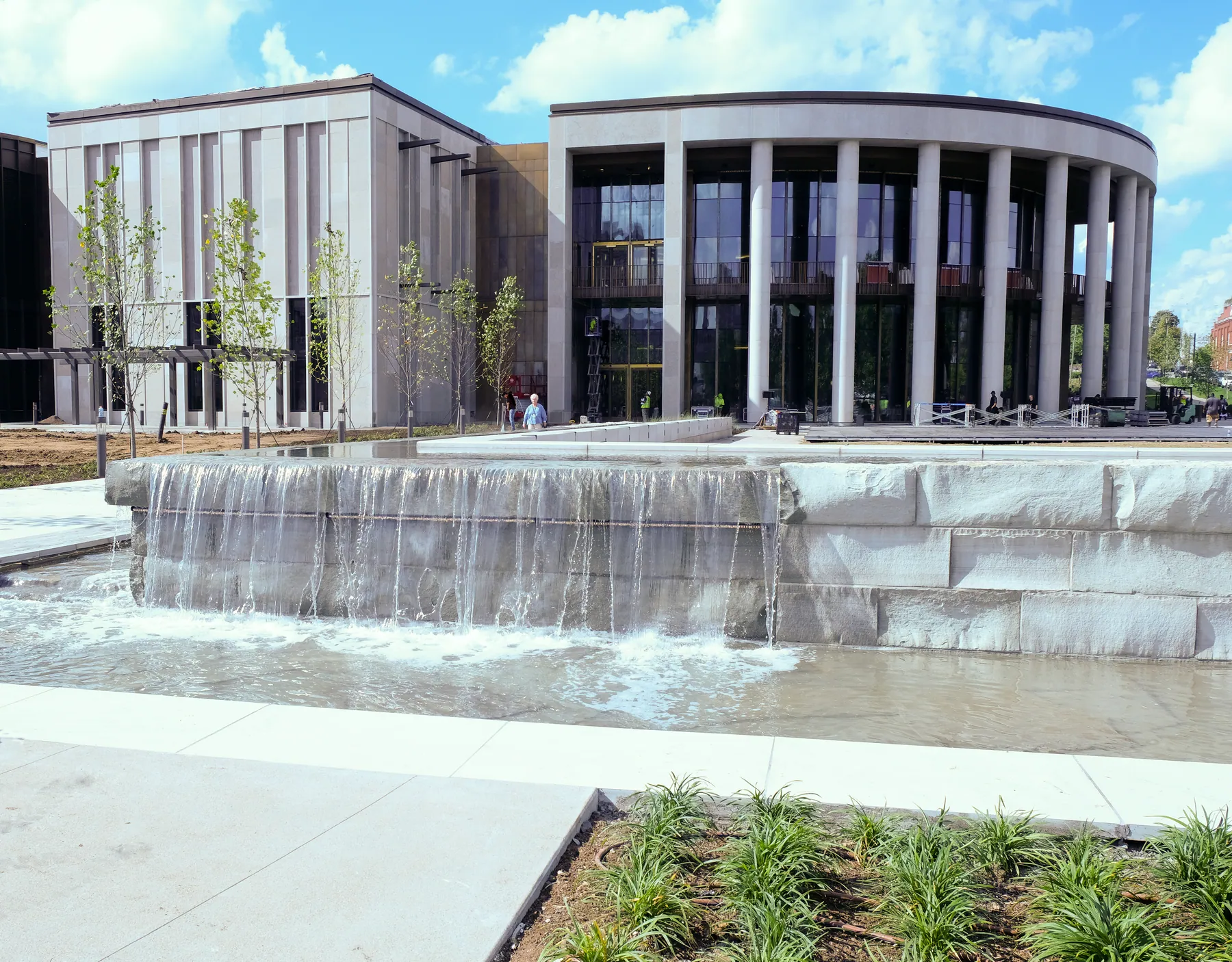
Tennessee State Museum
The Tennessee State Museum is a free museum of the state's history at the foot of Capitol Hill, beside Bicentennial Capitol Mall State Park.
National Museum of African American Music
The National Museum of African American Music, at Fifth and Broadway, covers more than 50 music genres created, influenced or inspired by African Americans, from church music and the blues to jazz and today's popular music.

Musicians Hall of Fame and Museum
The Musicians Hall of Fame and Museum honors the people behind the records: session musicians, producers and engineers who played on and shaped hit records.