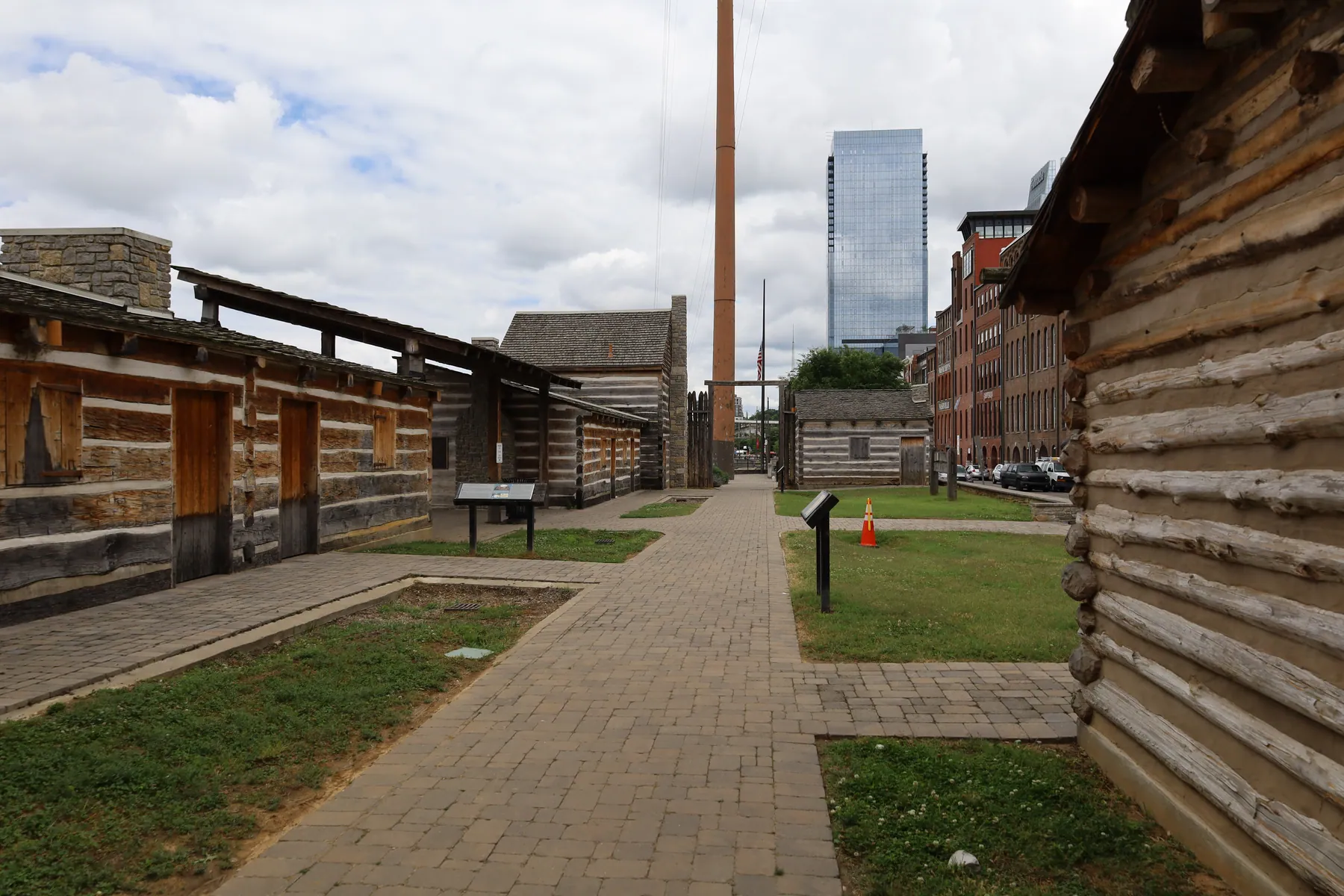
Fort Nashborough
Fort Nashborough on First Avenue North tells the story of Nashville's founding in 1779 and 1780, when settlers led by James Robertson and John Donelson built a fort on the bluffs above the Cumberland River. The site today is the Fort Nashborough History Center, renovated in 2017, with a plaza dedicated to Native American history. It sits a short distance from where the original fort stood.
Two parties, one settlement
The settlement was established in early 1779 in the French Lick area of the Cumberland River valley, an area named for a French trading post set up there in 1714.
James Robertson led about 200 settlers overland from Fort Patrick Henry, on Long Island at present-day Kingsport, leaving on November 1, 1779; winter delays meant their trip did not end until Christmas Day. John Donelson led a second party by river. His boat, the Adventure, was rigged with a small sail made from a sheet, and on March 20, 1780, the group camped at the mouth of the Tennessee River, where Paducah, Kentucky, is now, before reaching the settlement that spring.
The settlement was named for General Francis Nash, who had won acclaim fighting in the American Revolution. In 1780 Robertson drew up a constitution for the settlers called the Cumberland Compact. North Carolina incorporated the settlement as the town of Nashville in 1784. Robertson and Donelson are often described as founders of Tennessee.
The fort on the bluff
The original fort was square and covered about two acres, built around a freshwater spring among the cedar trees on the river bluff. It held 20 log cabins.
French Lick Creek and its springs, which drew Native Americans and early settlers to the area, ran through land that is now Bicentennial Capitol Mall State Park, about a mile northwest.
The Battle of the Bluffs
On April 2, 1781, a force of Chickamauga Cherokee attacked the fort. They lured most of the men out and cut them off from the entrance. The settlers made it back inside, helped by the fort's dogs, which the women turned loose, but the Cherokee captured their horses.
The replicas
In 1930 the local Daughters of the American Revolution, led by Lizzie Elliott, paid for a reconstruction of the fort, which was rebuilt in 1962 on a smaller scale than the original two-acre enclosure. That replica on First Avenue North fell into disrepair and was demolished in 2015.
A ribbon-cutting on July 13, 2017, opened the renovated Fort Nashborough History Center. It was designed as a more inclusive telling of the city's past and includes a plaza dedicated to Native American history.
Visiting
The History Center is on First Avenue North just north of Riverfront Park, so it is easy to pair with a walk along the river. Log buildings and interpretive signs stand along its brick paths. Bicentennial Capitol Mall, with its history wall and granite state map, picks up the story of the state after settlement.
Questions
Is Fort Nashborough the original fort?
No. The original fort, about two acres with 20 log cabins, stood a short distance away. The current site is the Fort Nashborough History Center, renovated in 2017.
Who founded Nashville?
Settlers led by James Robertson, who came overland, and John Donelson, who came by river, founded the settlement in 1779 and 1780.
Why was it called Nashborough?
It was named for General Francis Nash, who had won acclaim fighting in the American Revolution.
Sources
- Fort Nashborough, Wikipedia
- Fort Nashborough, Tennessee Encyclopedia
- Riverfront Park, Nashville Downtown Partnership
- Bicentennial Capitol Mall State Park, Wikipedia
Checked October 6, 2026.
Photo: Antony-22, CC BY-SA 4.0, via Wikimedia Commons. Cropped.
More things to do
All 60Riverfront Park and Ascend Amphitheater
Riverfront Park runs along the Cumberland River at the foot of Broadway, on the stretch of bank where some of Nashville's first settlers arrived by river.
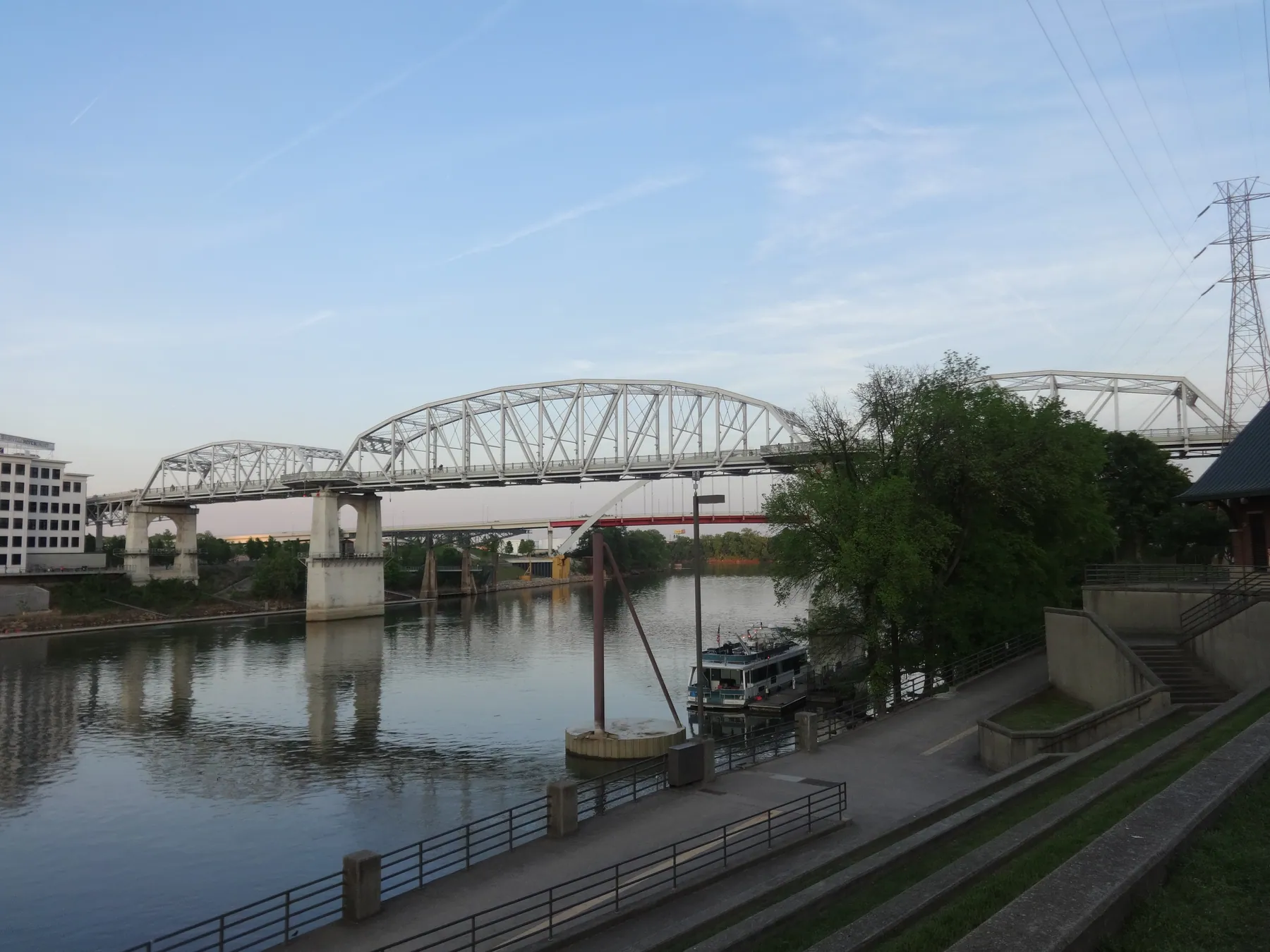
John Seigenthaler Pedestrian Bridge
The John Seigenthaler Pedestrian Bridge is a 1909 truss bridge over the Cumberland River that was closed to cars in 1998 and rebuilt for people on foot and on bikes.
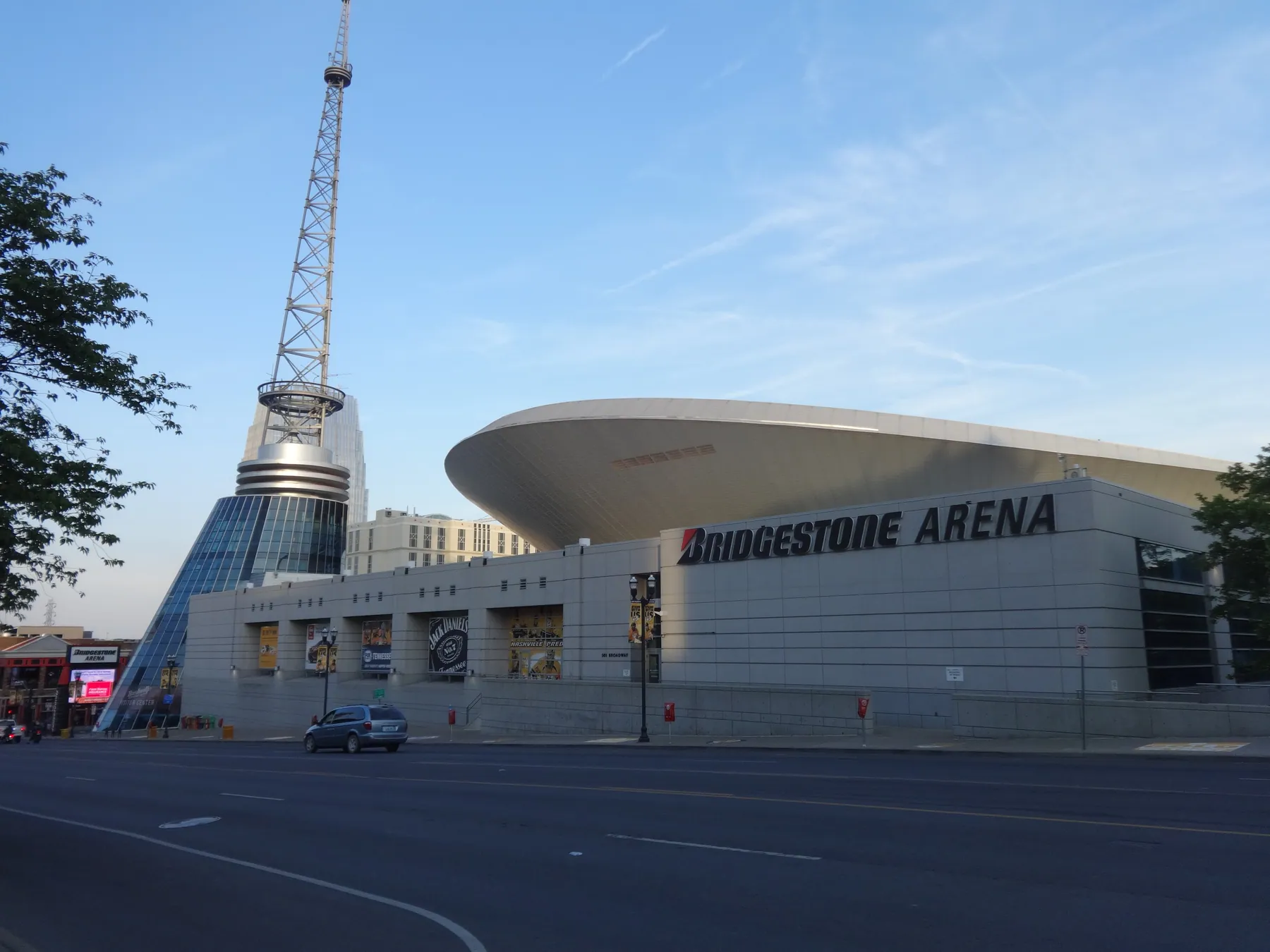
Bridgestone Arena
Bridgestone Arena is the downtown arena at Broadway and Rep.