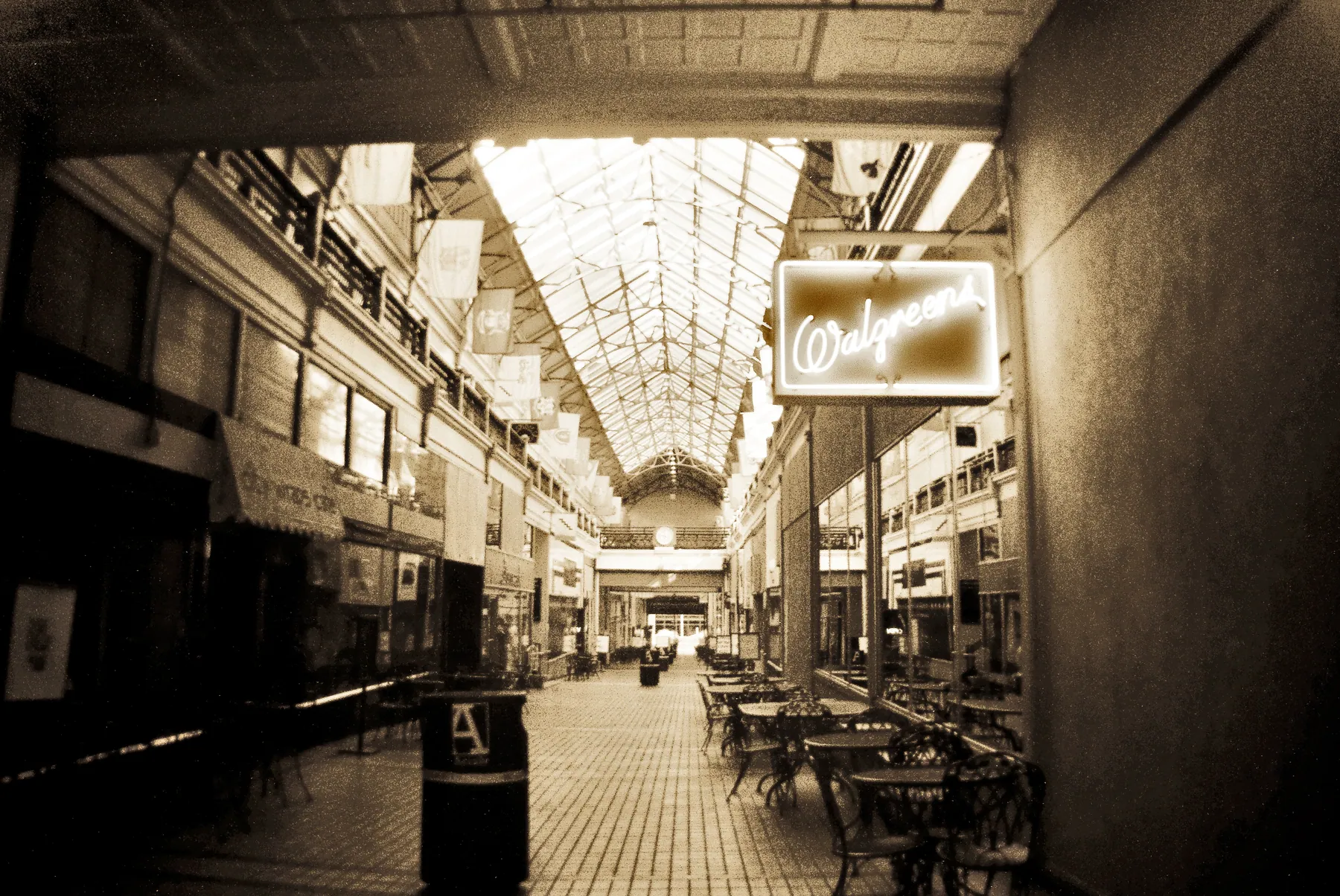
The Nashville Arcade
The Arcade is a covered, two-level shopping passage that runs between Fourth and Fifth avenues downtown, about a 4-minute walk from the lofts. It opened in the spring of 1903, was modeled on an arcade its developer saw in Milan, and still holds shops, food counters and bars under its glass roof.
An Idea From Milan
The idea came from Daniel Carter Buntin, who traveled to Italy and was impressed by a structure in Milan, according to the 1973 National Register nomination for the Arcade. The building's owners today name its model as the Galleria Vittorio Emanuele in Milan, a glass-roofed double arcade designed by Giuseppe Mengoni and built between 1865 and 1877 to connect the Piazza del Duomo with the Piazza della Scala.
Back in Nashville, Buntin organized a corporation to build an arcade, at a cost of $200,000, in 1902. It replaced Overton Alley and was designed by the firm Thompson, Gibel and Asmus. It was Nashville's first shopping center, and the 1973 nomination pointed out that its plan, a covered passage lined with shops on two levels, looked much like the shopping malls being built 70 years later.
Glass Roof and Iron Balconies
The nomination describes the Arcade as an open-ended bazaar made of two two-story brick buildings facing each other across a pedestrian mall. A steel and glass roof covers the walkway and keeps shoppers dry in any weather. The main passage runs about 367 feet and is 20 feet wide, with shops on both sides at street level.
On the second level, a balcony runs around all four sides of the mall, edged with ornate iron grillwork that serves as both a railing and decoration. The two entrances have matching Palladian facades. Tenants once advertised their goods on billboards hung from the balconies at each end; by 1973 those were no longer used.
When you walk through, look for these original features:
- The steel and glass roof over the full length of the passage
- The second-level balcony that wraps around all four sides
- The ornate iron grillwork along the balcony rail
- The matching Palladian facades at the Fourth and Fifth Avenue entrances
- The end balconies where tenants' billboards once hung
Opening Day, 1903
The Edgefield and Nashville company built it in less than a year, and the Arcade opened in the spring of 1903 with Captain T. M. Steger as president of the company. Opening day was a social occasion, with flags flying and Japanese lanterns decorating the mall, and for two decades afterward the Arcade was a center of social and recreational life in the city.
Early tenants included The Ocean, Patterson's Novelty Shop and Bland's Fruit Stand. The nomination repeats an old description of the place as a small town within a town, complete with its own mayor, where you could buy anything from a hamburger to a diamond.
Cherry Street, Summer Street and the Men's Quarter
When the Arcade opened, neither of its streets had a number. Fourth Avenue was Cherry Street and Fifth Avenue was Summer Street until the city council approved the switch to numbered avenues on December 22 and 23, 1904.
The Arcade's Cherry Street entrance looked across at the Men's Quarter, the block of Cherry Street between Church and Union that held saloons, billiard halls, restaurants, barber shops and bath houses from the 1890s until statewide prohibition in 1909. The Utopia Hotel (1891) at 206 Fourth Avenue North and the Southern Turf (1895) at 222 Fourth Avenue North were part of that block, which backs onto Printers Alley and is now part of the Printers Alley Historic District.
The Galleria in Milan is a four-story double arcade, two glass-vaulted passages that cross in an octagon under a glass and cast-iron roof. Nashville's version is a single straight passage of two stories, about 367 feet long, with the same idea of shops under glass.
On the National Register
The Junior League of Nashville prepared the Arcade's nomination, and it was listed on the National Register of Historic Places on May 22, 1973. At the time it was owned by the Arcade Company, whose president, Walter Stokes Jr., gave his address as the Arcade balcony. The Tennessee Historical Commission's executive director signed off on the nomination on April 11, 1973, about six weeks before the listing.
The form noted that in about 70 years the building had changed remarkably little, apart from an elevator and a few streamlined storefronts, mostly on the ground floor. It called the Arcade significant as one of the earliest arcades of its kind and for its unusual architectural style, and described it as still flourishing downtown.
Galleries and the Arts District
In later decades the Arcade became the center of the downtown Nashville Arts District and home to an arts community. That thread continues today: the current tenant list includes the Arcade Arts Program alongside the shops and restaurants.
The Arcade Today
The building has been restored with the local architects at Dryden Studio, and its owners describe their goal as bringing the Arcade back to what it was first meant to be, a mixed-use center for downtown.
The current tenant list includes shops such as The Peanut Shop, H Bar C Ranchwear, Savannah Bee Company, Tony's Shoe Service, Faherty, Flea Style, Mimi + Dottie, Any Old Iron and From Nashville with Love; food counters such as Ugly Bagel, Beignets & Brew, Playa Bowls, Zio Matto and NADC Burger; and bars including Urban Cowboy Bar, Buddy's Tiny Tonk and Bar Roza.
The Fourth Avenue entrance at 223 Fourth Avenue North is about 0.2 mile from the lofts, a 4-minute walk. The Fifth Avenue end comes out a short walk from the Ryman Auditorium.
Questions
When did the Nashville Arcade open?
It was built in 1902 and opened in the spring of 1903.
What was the Arcade modeled on?
An arcade in Milan that its developer, Daniel Carter Buntin, saw on a trip to Italy. The Arcade's owners identify it as the Galleria Vittorio Emanuele.
How far is the Arcade from Union Street Lofts?
About 0.2 mile, a 4-minute walk to the Fourth Avenue entrance at 223 Fourth Avenue North.
What is inside the Arcade today?
A mix of shops, food counters and bars, including The Peanut Shop, H Bar C Ranchwear, Savannah Bee Company, Ugly Bagel, Zio Matto, Urban Cowboy Bar and Buddy's Tiny Tonk, plus the Arcade Arts Program. Tenants change, so check the Arcade's tenant list before you go.
Sources
- The Nashville Arcade, National Register of Historic Places nomination (1973)
- Nashville Arcade, Wikipedia
- The Arcade Nashville, official site
- The Arcade Nashville, tenants
- Galleria Vittorio Emanuele II, Wikipedia
- Printers Alley Historic District, National Register of Historic Places nomination (1982)
- Nashville street name changes, Nashville History (Debie Cox)
Checked October 6, 2026.
Photo: Isaac777, CC BY-SA 3.0, via Wikimedia Commons. Cropped.
More journal
All 10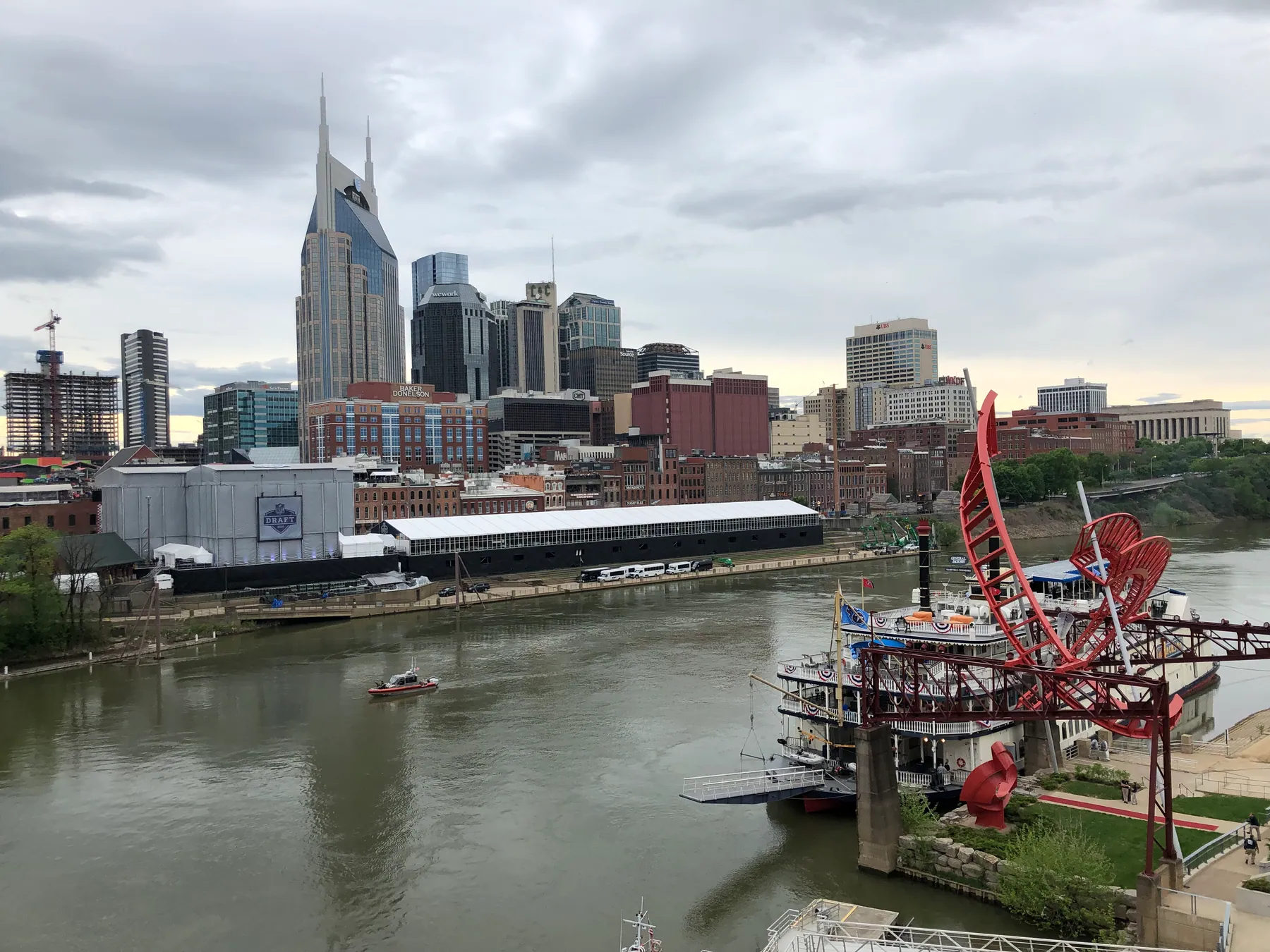
A First-Timer's Checklist for Nashville
A first trip to Nashville goes smoother with a few things settled before you land: which shows to book, how to get in from the airport, what you can walk to, what to eat and what to pack.
The Studios of Music Row
Music Row is the district along 16th and 17th avenues south of downtown where Nashville's record business set up shop starting in 1954.
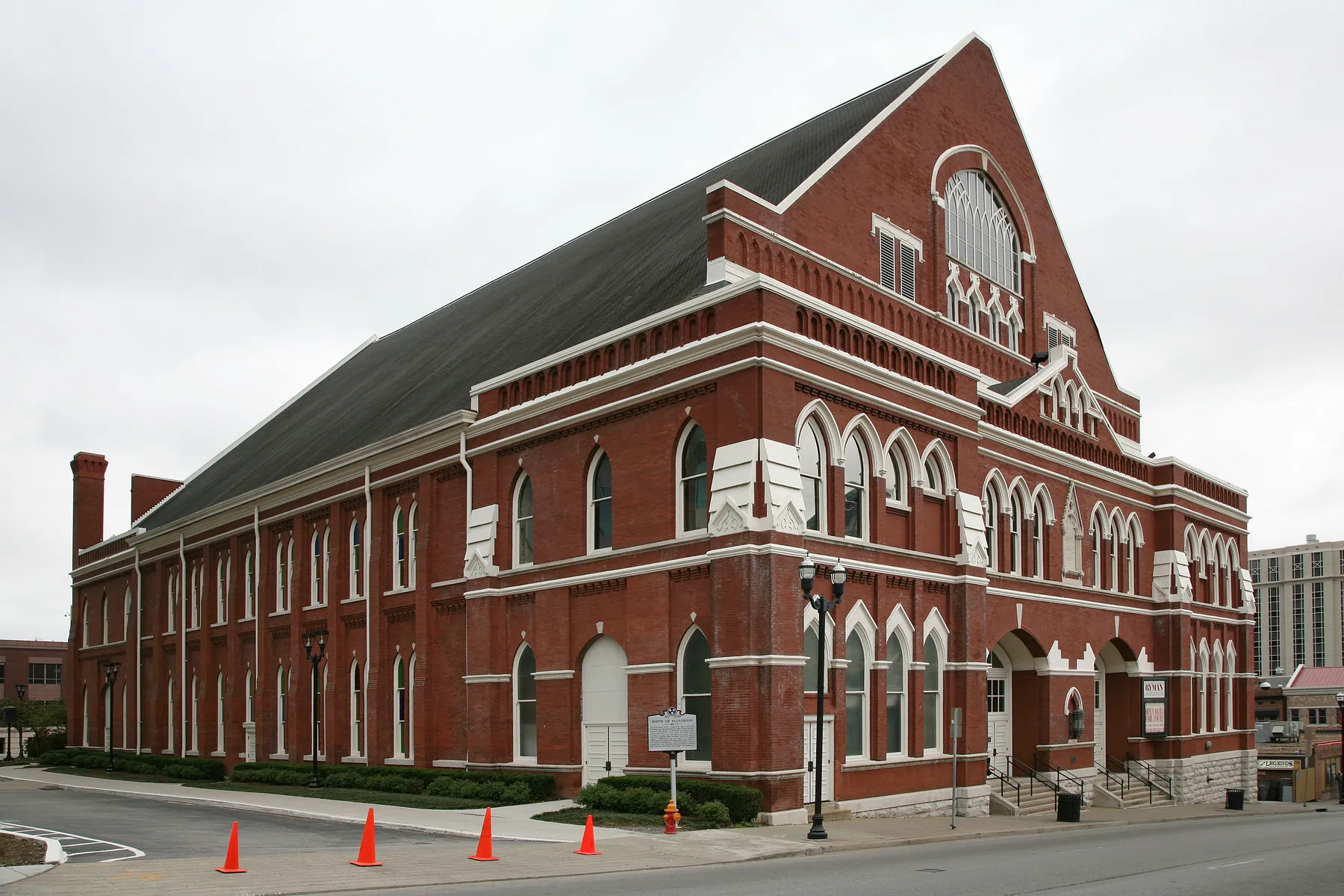
Planning a Group Trip to Nashville Step by Step
A Nashville trip for a bachelorette party, a milestone birthday or a game weekend runs smoother when you plan it in order: dates, beds, arrivals, tickets, meals, then the walking map.