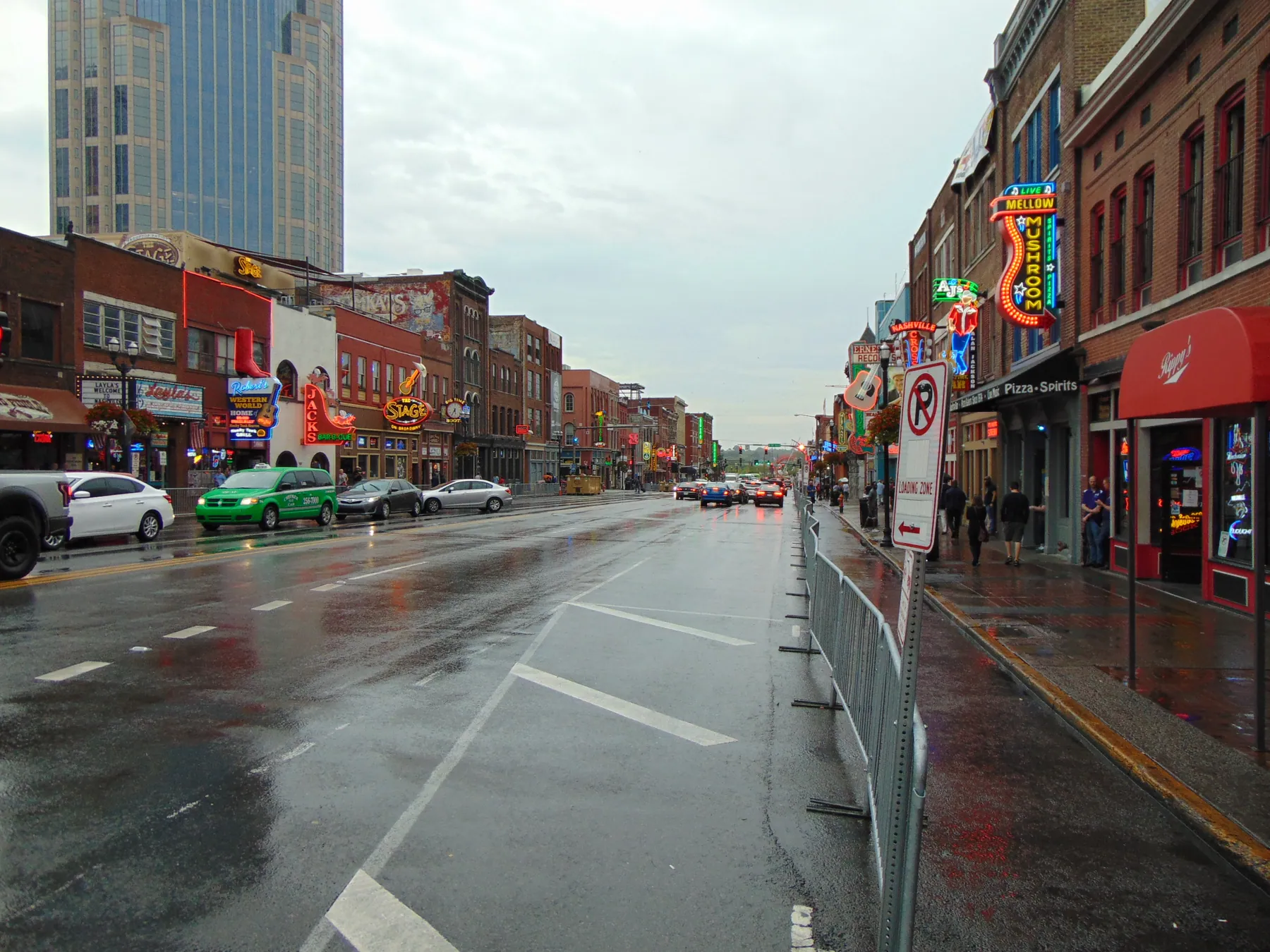
Downtown Nashville
The lofts sit at 329 Union Street, on the Printers Alley block of downtown Nashville, so many of the city's major sights are a short walk from the door. Lower Broadway, the Ryman Auditorium, the Tennessee State Capitol and the National Museum of African American Music are each within about an 8-minute walk.
Printers Alley, outside the door
Printers Alley runs between Union and Church Streets, between 3rd and 4th Avenues North, which puts its Union Street end on the lofts' block. It takes its name from the printing houses that filled it in the early 1900s. By 1915 the area held two large newspapers, The Tennessean and the Nashville Banner, plus 10 print shops and 13 publishers. The last printer, Ambrose Printing Company, left in 1977.
Nightlife here goes back to the late 1800s, when the area held saloons and gambling halls. When Prohibition went into effect in 1909, the alley's saloons became speakeasies, and after repeal owners ran mixer bars where customers brought their own bottle. The nightclub district on the stretch between Union and Church dates to the 1940s, and Chet Atkins, Boots Randolph, Dottie West and Hank Williams all played here. The alley was listed as a historic district on the National Register of Historic Places in 1982, and today it is lined with restaurants and nightclubs.
Lower Broadway
Lower Broadway is the stretch of Broadway from 1st Avenue to 5th Avenue, about an 8-minute walk from the lofts. The Broadway Historic District, nicknamed Honky Tonk Highway, went on the National Register on July 18, 1980. Live music plays in most of its bars and restaurants from as early as 10 a.m. until 3 a.m. or later, and the honky-tonks are known for having no cover charge.
Tootsie's Orchid Lounge sits behind the Ryman Auditorium and has three stages. Hattie Louise 'Tootsie' Bess bought the bar in 1960, and it took its name after a painter surprised her by painting the outside purple. Early regulars included Willie Nelson, Patsy Cline, Mel Tillis and Kris Kristofferson.
Broadway also splits downtown in two: north of Broadway, where the lofts are, and South of Broadway, or SoBro, which has its own page in this guide.
Ryman Auditorium
The Ryman, at 116 Rep. John Lewis Way North, opened in 1892 as the Union Gospel Tabernacle, built by Nashville businessman Thomas Ryman. The Grand Ole Opry broadcast from it from June 5, 1943, to March 15, 1974. A major restoration was finished in 1994, and the hall now seats 2,362 for concerts. It offers guided and self-guided daytime tours with backstage access; check the Ryman's site for tour times and show dates.
The Capitol and the music museum
The Tennessee State Capitol sits on Capitol Hill, about 0.4 mi from the lofts. It was completed in 1859. Its architect, William Strickland, died in 1854 before the work was done and is entombed in the building's east facade. President James K. Polk and his wife, Sarah Childress Polk, are buried on the northeast grounds, where their remains were moved in 1893. Tennessee State Museum staff give guided tours of the building and grounds.
The National Museum of African American Music opened on January 18, 2021, in the Fifth + Broadway development on the site of the old Nashville Convention Center, about an 8-minute walk from the lofts. It has five permanent galleries, a 200-seat theater and about 1,400 artifacts covering more than 50 genres, from early religious music to hip-hop and R&B.
When to go
Music on Lower Broadway starts as early as 10 a.m., so an afternoon visit gets you the bands with more room to move. Save the Capitol and the museum for a weekday morning, and leave Printers Alley for late evening, since it ends at your own block.
Questions
How far is Lower Broadway from the lofts?
About 0.4 mi, an 8-minute walk south.
Do the honky-tonks on Broadway charge a cover?
The Lower Broadway honky-tonks are known for having no cover charge, with live music from as early as 10 a.m. Ticketed concerts at venues like the Ryman are separate.
Can you tour the Ryman Auditorium?
Yes. The Ryman offers guided and self-guided daytime tours with backstage access. Check its site for current times.
Sources
- Printer's Alley, Wikipedia
- Broadway (Nashville, Tennessee), Wikipedia
- Tootsie's Orchid Lounge, Wikipedia
- Ryman Auditorium, Wikipedia
- Tennessee State Capitol, Wikipedia
- National Museum of African American Music, Wikipedia
Checked October 6, 2026.
Photo: An Errant Knight, CC BY-SA 4.0, via Wikimedia Commons. Cropped.
More neighborhoods
All 16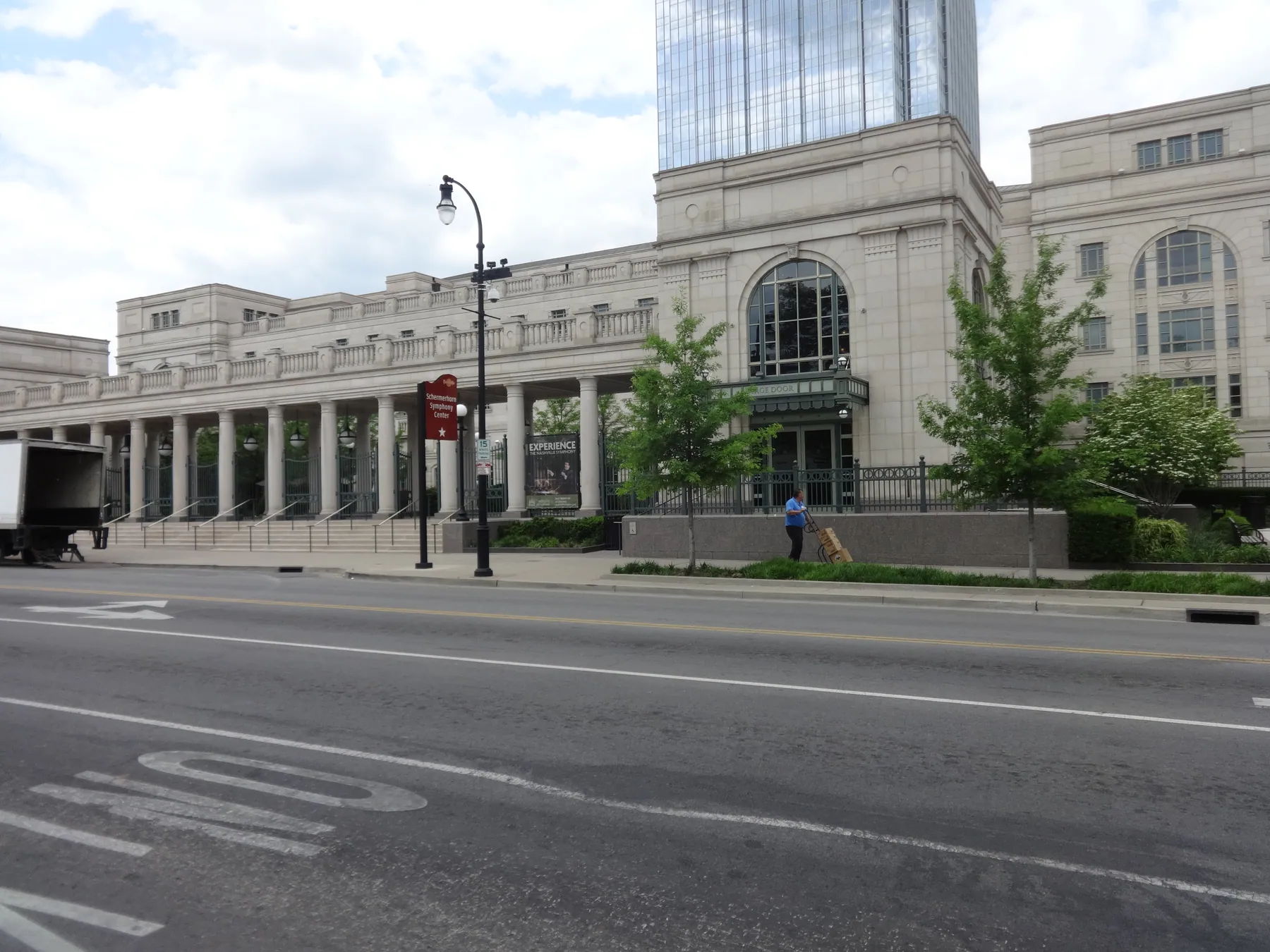
SoBro
SoBro, short for South of Broadway, is the part of downtown below Broadway that holds the Country Music Hall of Fame, the Schermerhorn Symphony Center, Music City Center and Ascend Amphitheater.
The Gulch
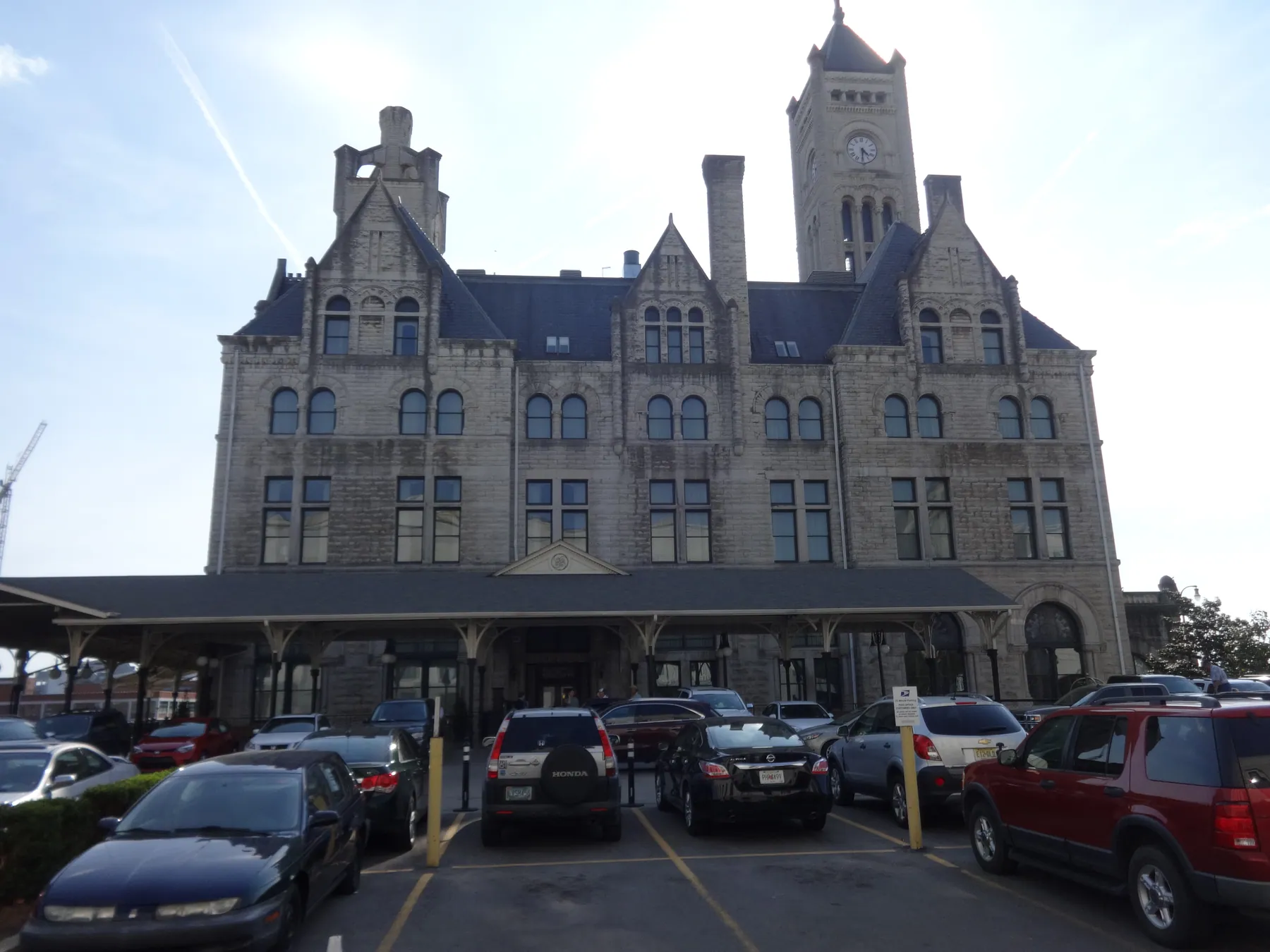
The Gulch is a former rail yard on the southwest side of downtown, now a walkable district of restaurants, shops, the What Lifts You wings mural and the Station Inn bluegrass club.
Germantown
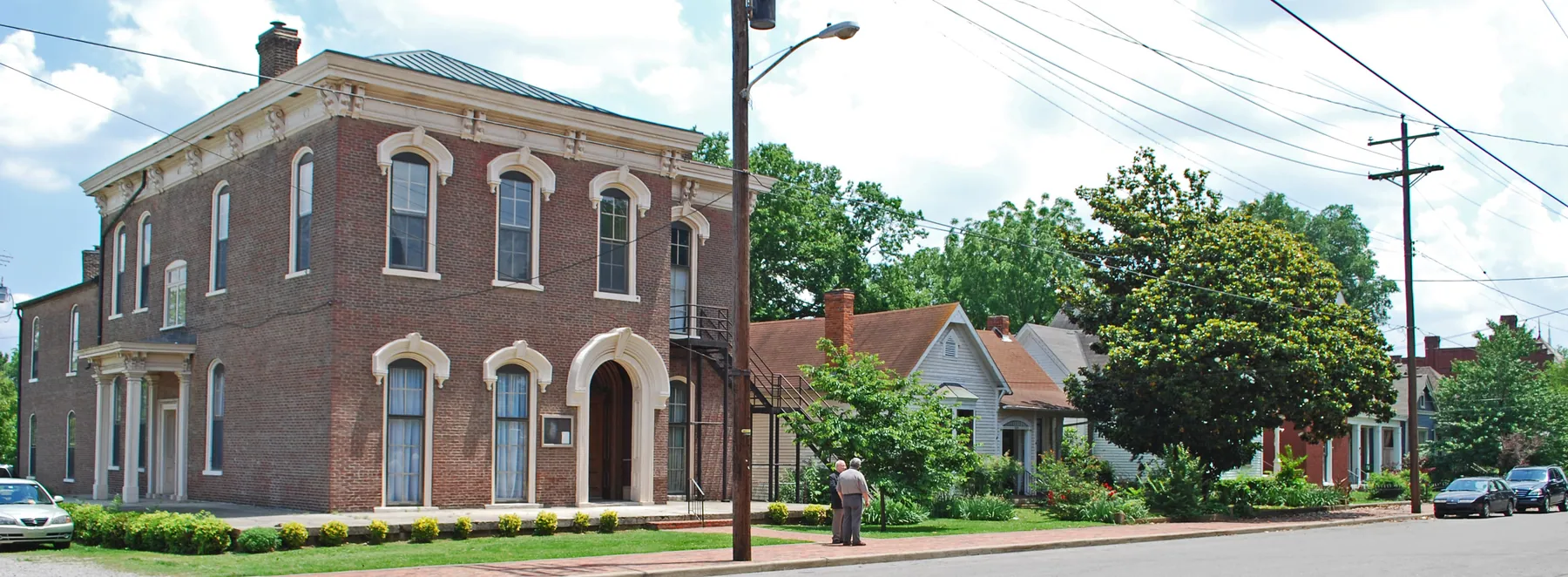
Germantown, a few blocks northwest of downtown, is Nashville's oldest neighborhood, a grid of 19th-century brick homes first built by German immigrants.