Germantown
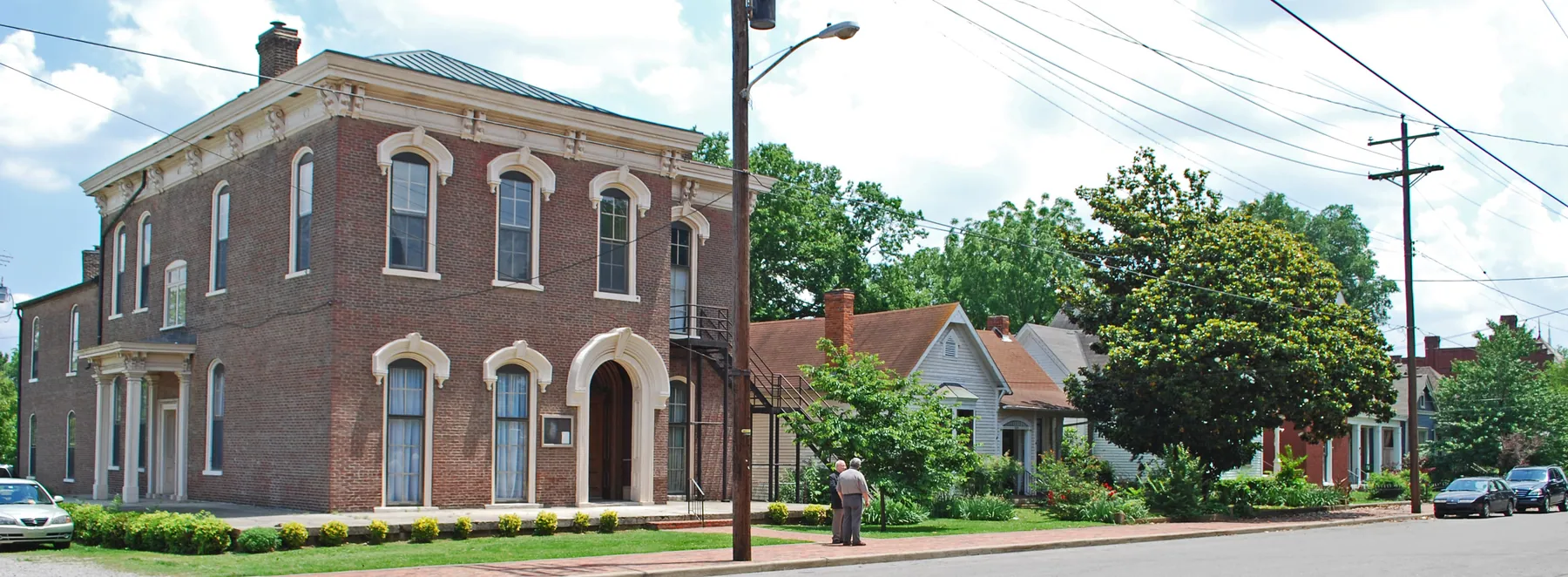
Germantown, a few blocks northwest of downtown, is Nashville's oldest neighborhood, a grid of 19th-century brick homes first built by German immigrants. Next to it are the Nashville Farmers' Market and the Bicentennial Capitol Mall, and every October it is the home of Nashville Oktoberfest.
Getting there
Germantown sits a few blocks northwest of downtown. From the lofts, the Bicentennial Capitol Mall is about 0.8 mi, a 16-minute walk, and the Farmers' Market is about 1.0 mi, a 20-minute walk. The historic streets around 6th and 7th Avenues North are about 1.3 mi, a 26-minute walk. It is an easy walk out and a short ride back.
German immigrants and brick townhouses
German immigrants began building homes here in the 1840s, and the area was established as Germantown in the 1850s. The historic district covers 18 city blocks bounded by Jefferson Street, 3rd Avenue North, Taylor Street and 8th Avenue North, with homes in Italianate, Stick, Eastlake and Queen Anne styles. It was listed on the National Register of Historic Places on August 1, 1979.
The Church of the Assumption, at 1227 7th Avenue North, was dedicated on August 14, 1859. It was added to the National Register in 1977 and is part of the historic district.
Oktoberfest
Nashville Oktoberfest grew out of the neighborhood's revival. In 1980, Msgr. Bernard Niedegeses and Jerry Strobel started the festival with local organizations to help revitalize Germantown and restore the Church of the Assumption.
It is held over a long weekend in early October. In 2025, its 46th year, the festival moved entirely inside Bicentennial park for the first time, with fencing and security screening. Entry was at 6th Avenue North at Jefferson Street or at Harrison Street, and organizers expected more than 20,000 people a day. Check the festival's site for the current year's dates.
Market, mall and food
The Nashville Farmers' Market, at 900 Rosa L. Parks Boulevard, is open daily year-round, with farm sheds, a Market House of restaurants and shops, and a garden center.
Next door, the Bicentennial Capitol Mall State Park opened on June 1, 1996, for the state's 200th birthday. Its 19 acres include a 200-by-50-foot granite map of Tennessee, a 95-bell carillon at the Court of Three Stars, 31 fountains representing the state's rivers, and a World War II memorial. It also borders the Tennessee State Museum, the State Capitol and First Horizon Park.
Monell's, at 1235 6th Avenue North, serves set-price, family-style meals at large shared tables in a Victorian-era house. Owner Michael King opened it on Thanksgiving Day 1995, and Thanksgiving is still its busiest day.
When to go
Go on a weekend morning for the Farmers' Market, then sit down to a group meal at Monell's. Come in early October if you want Oktoberfest.
Questions
When is Nashville Oktoberfest?
Over a long weekend in early October. In 2025 it was held entirely inside the fenced Bicentennial park for the first time. Check the festival's site for the current dates.
How far is Germantown from the lofts?
The Bicentennial Capitol Mall is about 0.8 mi (16 minutes on foot), and the historic streets around 6th and 7th Avenues North are about 1.3 mi (26 minutes).
Why is it called Germantown?
German immigrants began building homes here in the 1840s, and the area was established as Germantown in the 1850s.
What is there to see at the Bicentennial Capitol Mall?
A 200-by-50-foot granite map of Tennessee, a 95-bell carillon, 31 river fountains, a 1,400-foot wall of state history from 1766 to 1996, a 2,200-seat amphitheater and a World War II memorial with an 18,000-pound granite globe.
Sources
- Germantown Historic District, Wikipedia
- Church of the Assumption (Nashville, Tennessee), Wikipedia
- WSMV, Nashville Oktoberfest moved to Bicentennial Park (Oct. 3, 2025)
- Bicentennial Capitol Mall State Park, Wikipedia
- Nashville Farmers' Market
- Monell's
Checked October 6, 2026.
Photo: Andrew Jameson, CC BY-SA 3.0, via Wikimedia Commons. Cropped.
More neighborhoods
All 16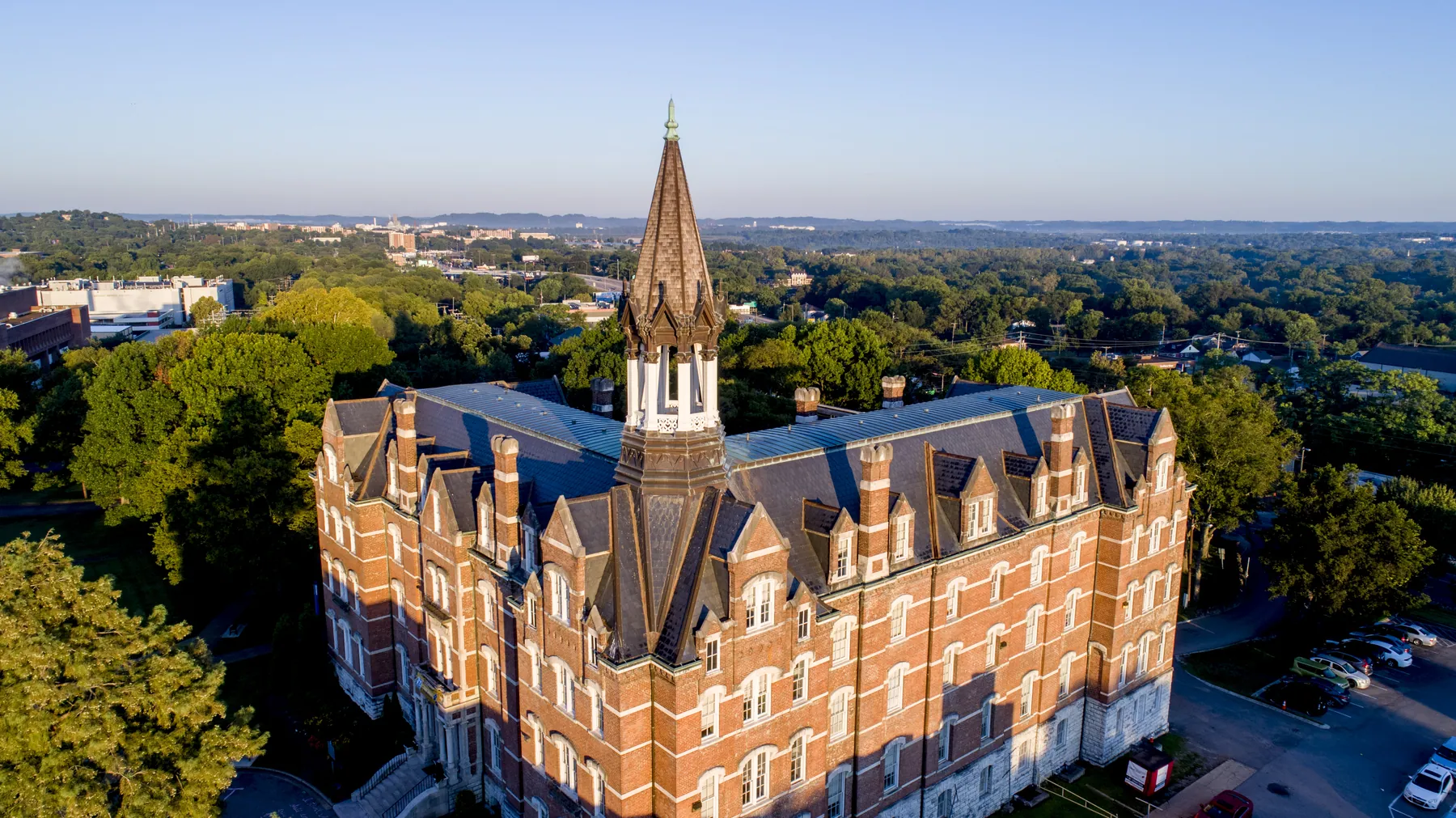
Jefferson Street and North Nashville
Jefferson Street, in North Nashville, grew into the center of the city's African American community, with three historically Black universities around it and a run of R&B clubs that drew Jimi Hendrix, Etta James and Little Richard.
East Nashville
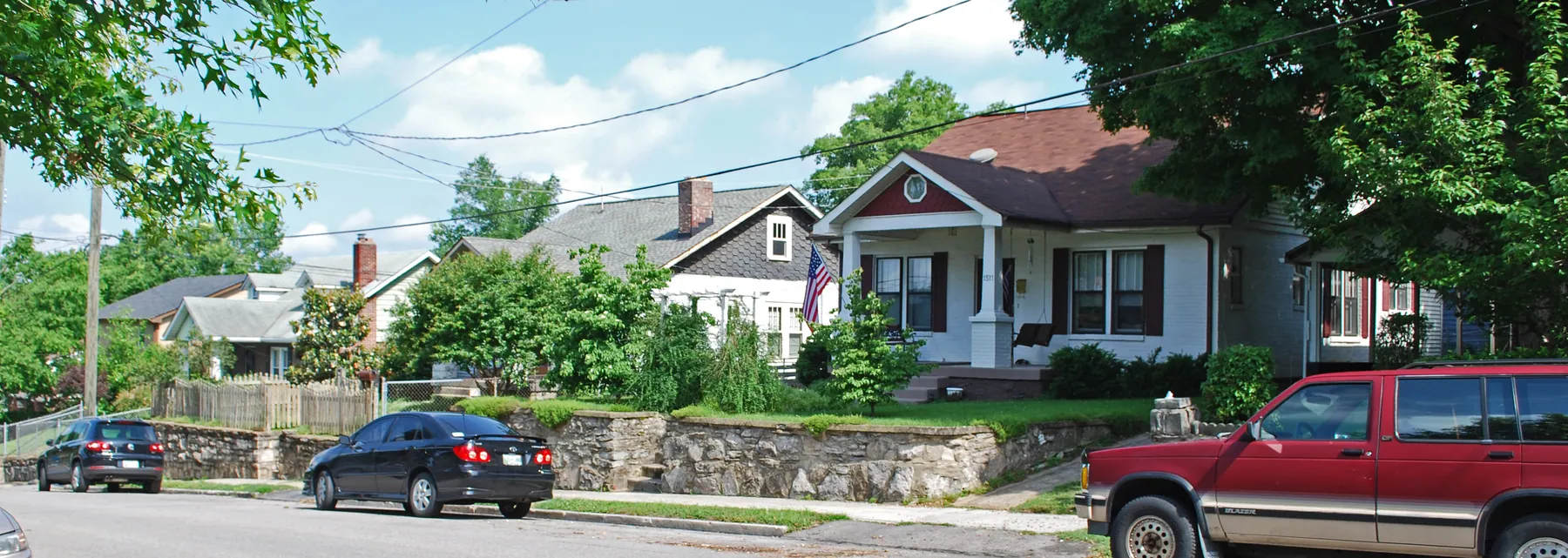
East Nashville is the mostly residential side of the city across the Cumberland River from downtown, with historic homes from the early 1900s, neighborhood restaurants, dive bars, record stores and music venues.
Five Points
Five Points is the small commercial crossroads at the center of East Nashville, where Woodland, Clearview and 11th streets meet.