Printers Alley
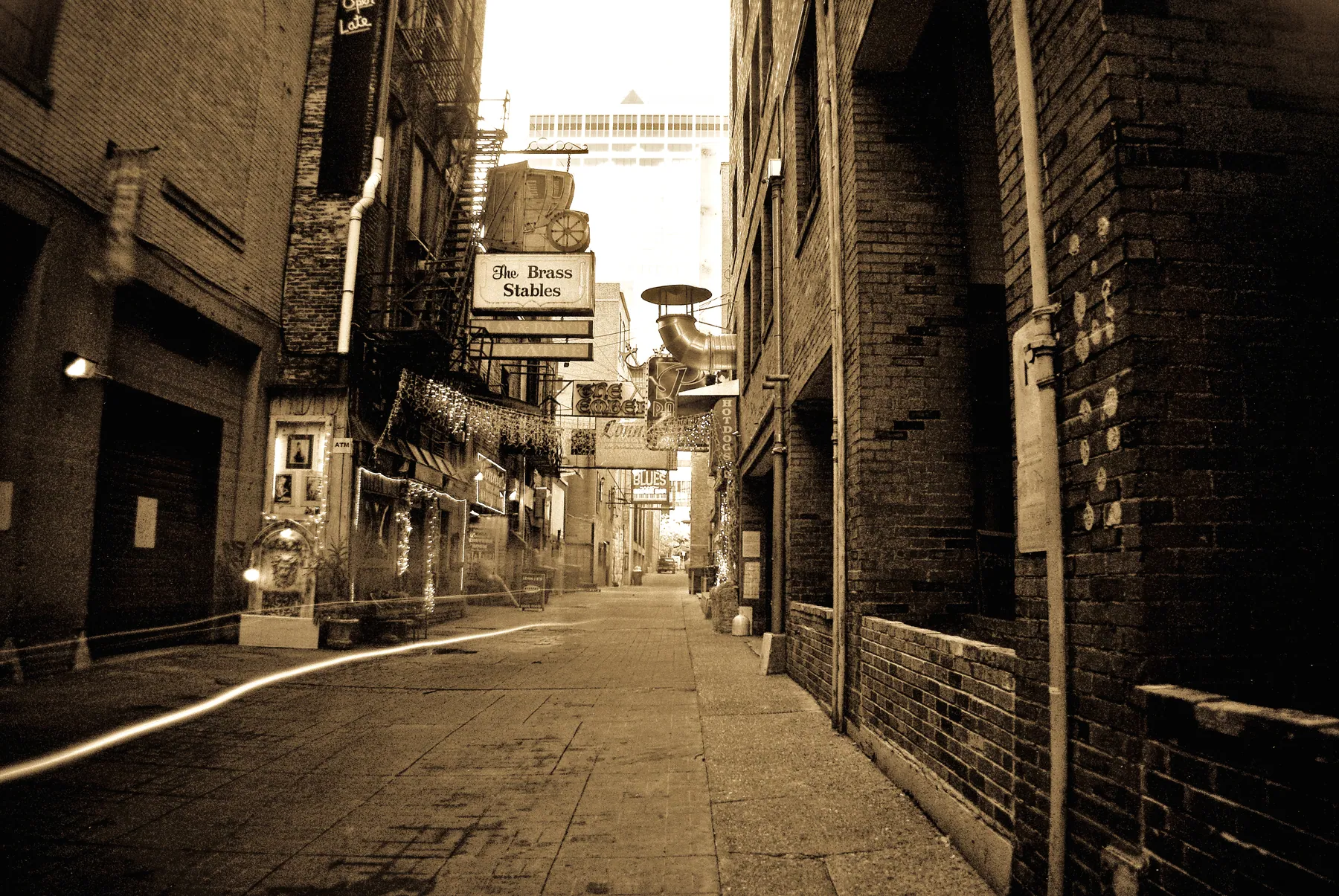
Printers Alley is a narrow brick lane that runs through the downtown block between Third and Fourth Avenues North, from Union Street to Church Street. It took its name from the newspapers and print shops that worked here for more than a century, and its reputation from the speakeasies and supper clubs that came later. Today it holds a short run of live music rooms, bars and restaurants inside buildings that date back to the 1870s.
Where the alley runs
The alley cuts through the block bounded by Union Street on the north, Third Avenue on the east, Church Street on the south and Fourth Avenue on the west, and the historic district carries on across Church Street. The land came to the city in the 1780s as a gift from George Michael Deadrick, a Virginia businessman.
The Printers Alley Historic District covers about five acres and 15 commercial buildings dated 1874 to 1929. Their styles run from Italianate and Romanesque Revival to Queen Anne, neoclassical and Art Deco. Three of the named buildings are the Climax Saloon (1887), the Utopia Hotel (1891) and the U.S. Bank Building (1929). The district was listed on the National Register of Historic Places on August 26, 1982.
Newspapers and print shops
Printing in the alley dates to around 1830, and by the middle of the 19th century the trade was thriving. By 1915 the block held Nashville's two big daily papers, The Tennessean and the Nashville Banner, along with 10 print shops and 13 publishers.
The printers stayed long after the nightlife arrived. The last one, Ambrose Printing Company, moved out in 1977.
The streets on either side had their own trades. College Street, now Third Avenue, had eight retail furniture stores. Cherry Street, now Fourth Avenue, became the Men's Quarter, a block given over to saloons, billiard halls, restaurants, tobacconists, barber shops and bath houses.
Speakeasies and mixer bars
Tennessee banned alcohol statewide in 1909. Many of the saloons and hotel bars around the alley kept pouring as speakeasies, with protection from politicians and police.
The state repealed prohibition in 1937, four years after the national repeal, but liquor still could not be sold by the glass. Owners got around that with mixer bars: customers brought their own bottle and the bartender mixed the drinks. Nashville legalized liquor by the drink in 1968, and the change hurt business in the alley's clubs.
The supper club years
From the late 1940s, club owners including David Schulman, known as Skull, combined dinner, burlesque and live music under one roof. The Captain's Table, the Brass Rail Stables, the Embers, the Black Poodle Lounge, the Voo Doo Lounge and the Rainbow Room ran on that model for about 30 years. The dancer Heaven Lee performed at the Black Poodle for 10 years.
The list of musicians who played the alley includes Chet Atkins, Floyd Cramer, Boots Randolph, Hank Williams, Waylon Jennings, Mel Tillis, Dottie West, the Supremes and Jimi Hendrix.
Schulman was still running the Rainbow Room in 1998, when two robbers killed him there shortly before the club was due to open. The room reopened in June 2015 as Skull's Rainbow Room.
Printers Alley now
Today the alley is a paved pedestrian service lane lined with brick facades, cast-iron balconies and window boxes, with restaurants and nightclubs in the old buildings. Three places that carry the alley's history forward:
- Skull's Rainbow Room, 222 Printers Alley: dinner, cocktails and live jazz nightly, with burlesque shows Friday through Sunday.
- Bourbon Street Blues and Boogie Bar, 220 Printers Alley: live blues every night and a Cajun and Creole menu. It has been in the alley for more than 25 years, and James Brown and B.B. King are among those who played its stage.
- The Southern Turf building, 222 Fourth Avenue North: built in 1895 as a saloon, hotel and gambling house in the old Gentleman's Quarter, it now holds the Southern Turf Club, a bar and lounge.
Questions
Why is it called Printers Alley?
Print shops worked here from around 1830, and by 1915 the block held The Tennessean, the Nashville Banner, 10 print shops and 13 publishers. The last printer, Ambrose Printing Company, left in 1977.
Is there still live music in Printers Alley?
Yes. Bourbon Street Blues and Boogie Bar books live blues every night, and Skull's Rainbow Room has live jazz nightly plus burlesque shows Friday through Sunday.
Is Printers Alley a historic district?
Yes. The Printers Alley Historic District was added to the National Register of Historic Places on August 26, 1982. It covers about five acres and 15 commercial buildings dated 1874 to 1929.
Sources
- Printer's Alley, Wikipedia
- Printer's Alley Historic District, The Cultural Landscape Foundation
- Printers Alley, Nashville Sites (Nashville Historical Foundation)
- Skull's Rainbow Room, official site
- Bourbon Street Blues and Boogie Bar, official site
- Southern Turf Club, Nashville Downtown Partnership
Checked October 6, 2026.
Photo: Isaac777, CC BY-SA 3.0, via Wikimedia Commons. Cropped.
More things to do
All 60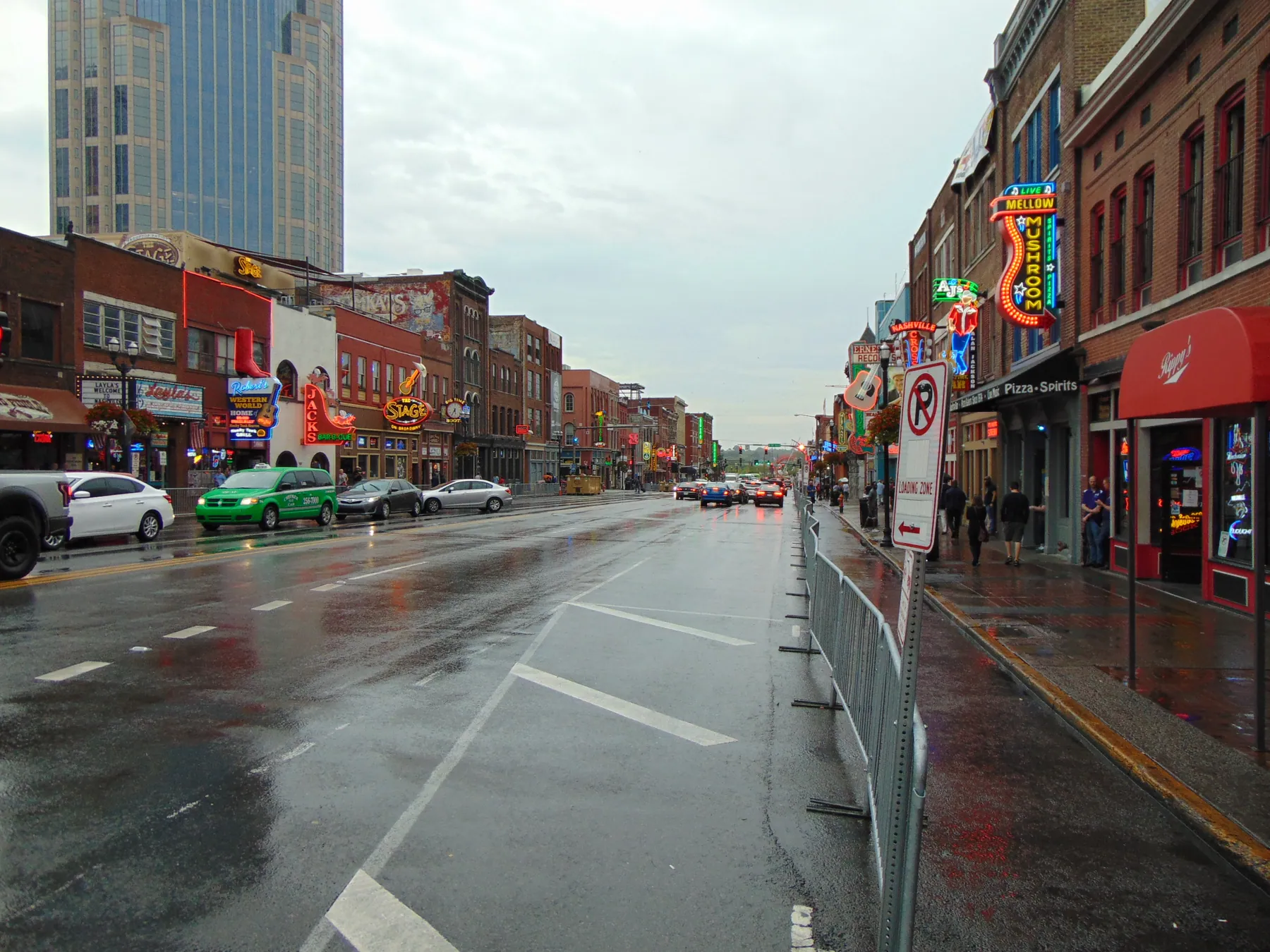
Lower Broadway
Lower Broadway is the stretch of Broadway that runs from First Avenue at the Cumberland River up to Fifth Avenue, lined on both sides with honky-tonks that play live music from late morning into the night.
Ryman Auditorium
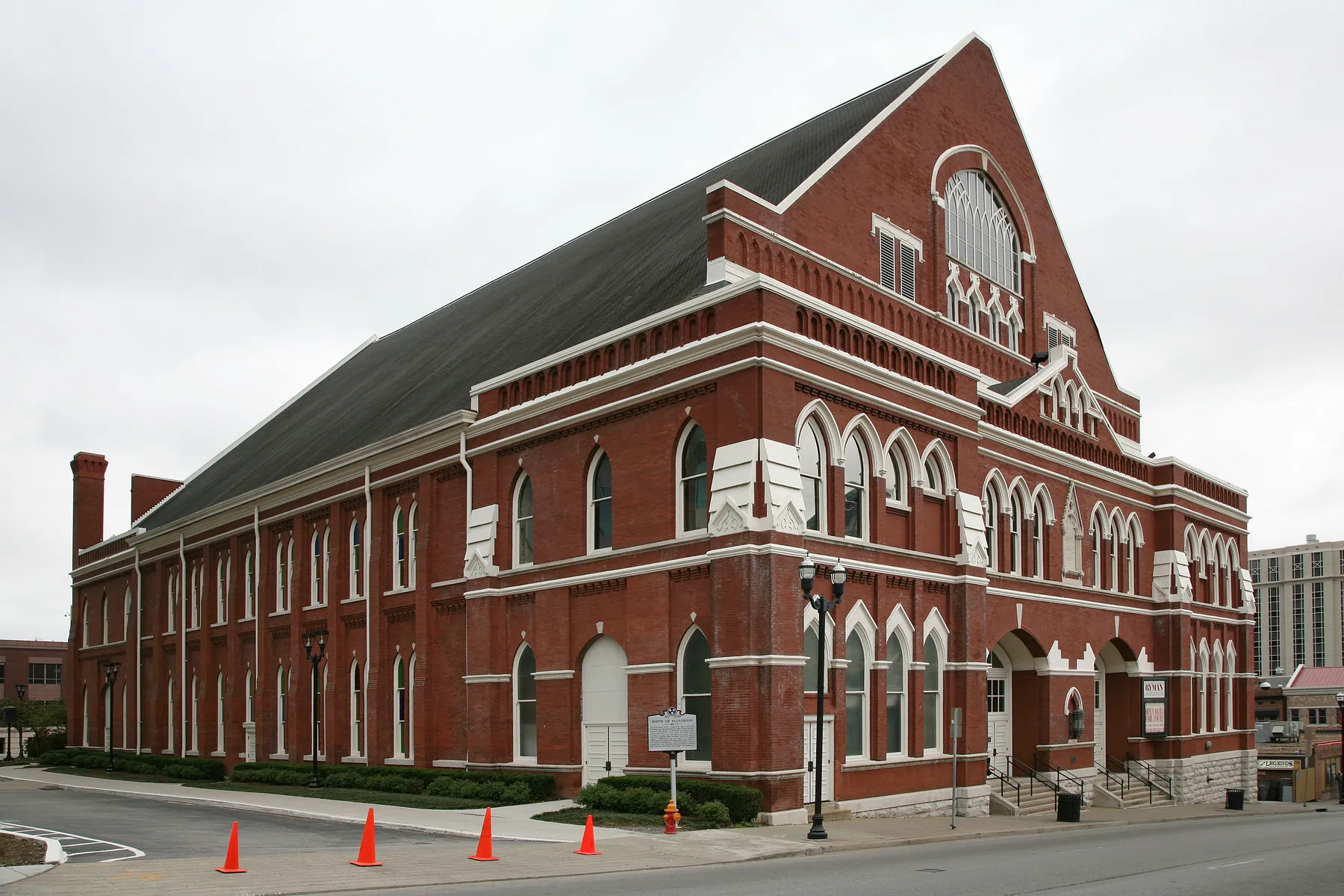
The Ryman Auditorium is the brick hall on Rep.
Country Music Hall of Fame and Museum
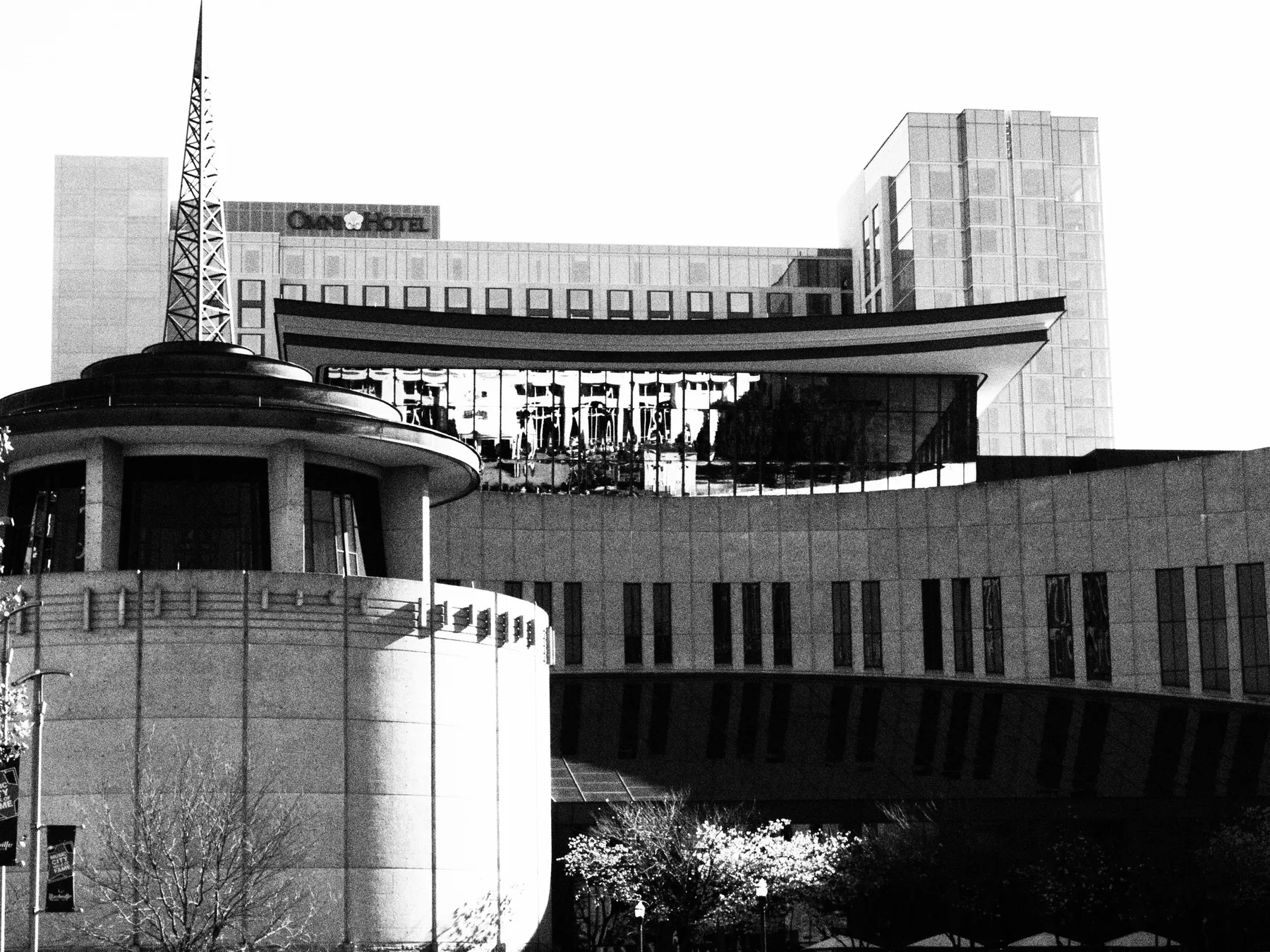
The Country Music Hall of Fame and Museum is the large building on Rep.