How the Grand Ole Opry Moved From the Ryman
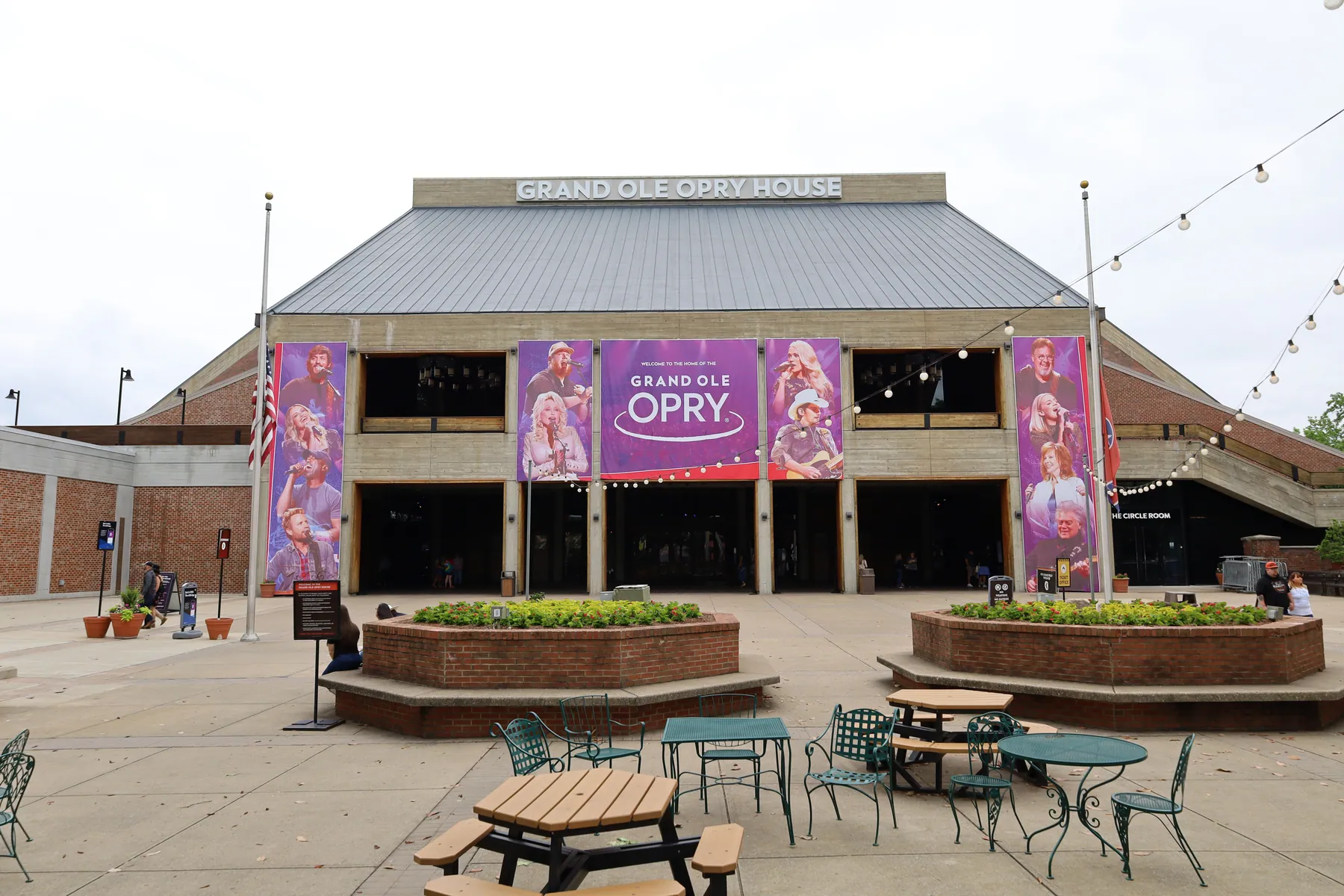
For about 31 years the Grand Ole Opry broadcast from the Ryman Auditorium, about a 6-minute walk from the lofts. On March 15, 1974, it played its last Friday show there, and the next night it opened in a new Opry House east of downtown. Here is why it left, what it took along and how the Ryman came back.
Before the Ryman
WSM radio went on the air for the first time on October 5, 1925. Less than two months later, on November 28, 1925, George D. Hay launched the WSM Barn Dance with Uncle Jimmy Thompson, a 77-year-old fiddle player, from a studio in the National Life & Accident Insurance Company building. In December 1927, following an NBC broadcast of Walter Damrosch's Music Appreciation Hour, Hay told listeners that after an hour of music taken largely from grand opera, they would now hear the Grand Ole Opry. He said it while introducing the performer DeFord Bailey, and the name stuck.
Crowds outgrew the studio. The Opry moved to the Hillsboro Theatre in 1934, to the Dixie Tabernacle in East Nashville on June 13, 1936, and to the War Memorial Auditorium in 1939. In June 1943 it settled at the Ryman Auditorium, which had opened in 1892 as the Union Gospel Tabernacle and took the name of Thomas Ryman after his death on December 23, 1904.
The Ryman already had a long stage history. Its first concert was the May Music Festival with the Theodore Thomas Orchestra, held May 4-7, 1892, the Fisk Jubilee Singers made their Ryman debut that same year, and the board recognized Lula Naff as the hall's manager in 1920. In 1945, two years into the Opry's run, Earl Scruggs made his Opry debut there with Bill Monroe's Blue Grass Boys.
Why the Ryman Stopped Working
The Ryman years produced performances by Hank Williams, Patsy Cline, Loretta Lynn, Willie Nelson, Dolly Parton and Elvis Presley. But the show's popularity often drew crowds too large to fit inside, and the building had no air conditioning.
By the late 1960s the hall was aging and in disrepair, and the downtown neighborhood around it was in decline. Histories of the hall list its unsavory surroundings among the reasons the Opry moved, along with the crowds and the heat.
Opryland and a Plan to Tear Down the Ryman
The answer was a new home east of downtown, at the Opryland development, where the Opryland USA theme park opened on June 30, 1972. The new Grand Ole Opry House was built there, and the Opry Mills shopping center now stands beside it.
The Ryman itself was nearly lost. WSM president Irving Waugh announced a plan to demolish it and use its materials to build a chapel called the Little Church of Opryland at the park. Ada Louise Huxtable, the architecture critic of The New York Times, called it "first prize for the pious misuse of a landmark." Preservation groups fought the plan, the building had been listed on the National Register of Historic Places in 1971, and it was never torn down.
March 15 and 16, 1974
The Opry broadcast its last Friday show from the Ryman on March 15, 1974. The next night, Saturday, March 16, Roy Acuff opened the first show in the new 4,440-seat Grand Ole Opry House. President Richard Nixon attended opening night and played a few songs on the piano.
The Opry brought a piece of the old building with it. A six-foot circle of oak was cut from the corner of the Ryman's stage and inlaid into center stage at the new house.
The Ryman's Empty Years and Return
Across the alley, Tootsie's Orchid Lounge, whose back door faces the Ryman's stage door and which had been a regular stop for Opry performers since 1960, kept going after the move and thrived again in the 1990s. With the Opry gone, the Ryman itself sat mostly vacant and deteriorating for nearly 20 years. Gaylord Entertainment began a full renovation in September 1993, and the hall reopened on June 4, 1994, with Garrison Keillor's A Prairie Home Companion as the first performance. It reopened as a performance hall and museum and now seats 2,362.
The Opry came back too, for part of the year. Starting with shows on January 15 and 16, 1999, it returned to the Ryman for winter runs every year until the 2019-20 season, and shorter winter residencies resumed in 2023. The Ryman was declared a National Historic Landmark on June 25, 2001.
Other milestones came along the way. Emmylou Harris and the Nash Ramblers recorded Live at the Ryman there in 1991, and the building celebrated its centennial in 1992. In 2022 it was named a Rock & Roll Landmark, and the Rock Hall at the Ryman exhibit opened that November.
Floods, a Mall and a Centennial
The Opryland theme park closed after the 1997 season and was demolished, and the Opry Mills shopping center opened in May 2000. In May 2010 a flood swamped the Opry House. The show moved its broadcasts to other venues while the building was repaired and returned to the Opry House on September 28, 2010, about four months later.
The Opry opened its centennial year with Opry 100, a live three-hour NBC special, on March 19, 2025. On November 28, 2025, more than 25 Opry members returned to the stage to mark 100 years since the first broadcast.
Today the Ryman is about 0.3 mile from the lofts, a 6-minute walk. The Grand Ole Opry House is about 7.4 miles away, roughly 18 minutes by car.
Questions
When did the Grand Ole Opry leave the Ryman?
Its last Friday show at the Ryman was March 15, 1974. The first show at the new Grand Ole Opry House was the next night, March 16, 1974.
Does the Opry still play the Ryman?
For part of the year. After annual winter runs from 1999 to the 2019-20 season, the Opry resumed shorter winter residencies at the Ryman in 2023. Check the Opry's schedule for your dates.
How far is the Opry House from Union Street Lofts?
About 7.4 miles, roughly 18 minutes by car. The Ryman is about 0.3 mile, a 6-minute walk.
Can you visit the Ryman without going to a show?
Yes. When it reopened in 1994, the Ryman became both a performance hall and a museum, so you can see the room by day. Check the Ryman's site for current tour options.
Sources
- Opry history, Grand Ole Opry
- Ryman history, Ryman Auditorium
- Grand Ole Opry, Wikipedia
- Grand Ole Opry House, Wikipedia
- Ryman Auditorium, Wikipedia
- Tootsie's Orchid Lounge, Wikipedia
- Broadway Historic District, National Register of Historic Places nomination (1979)
Checked October 6, 2026.
Photo: Antony-22, CC BY-SA 4.0, via Wikimedia Commons. Cropped.
More journal
All 10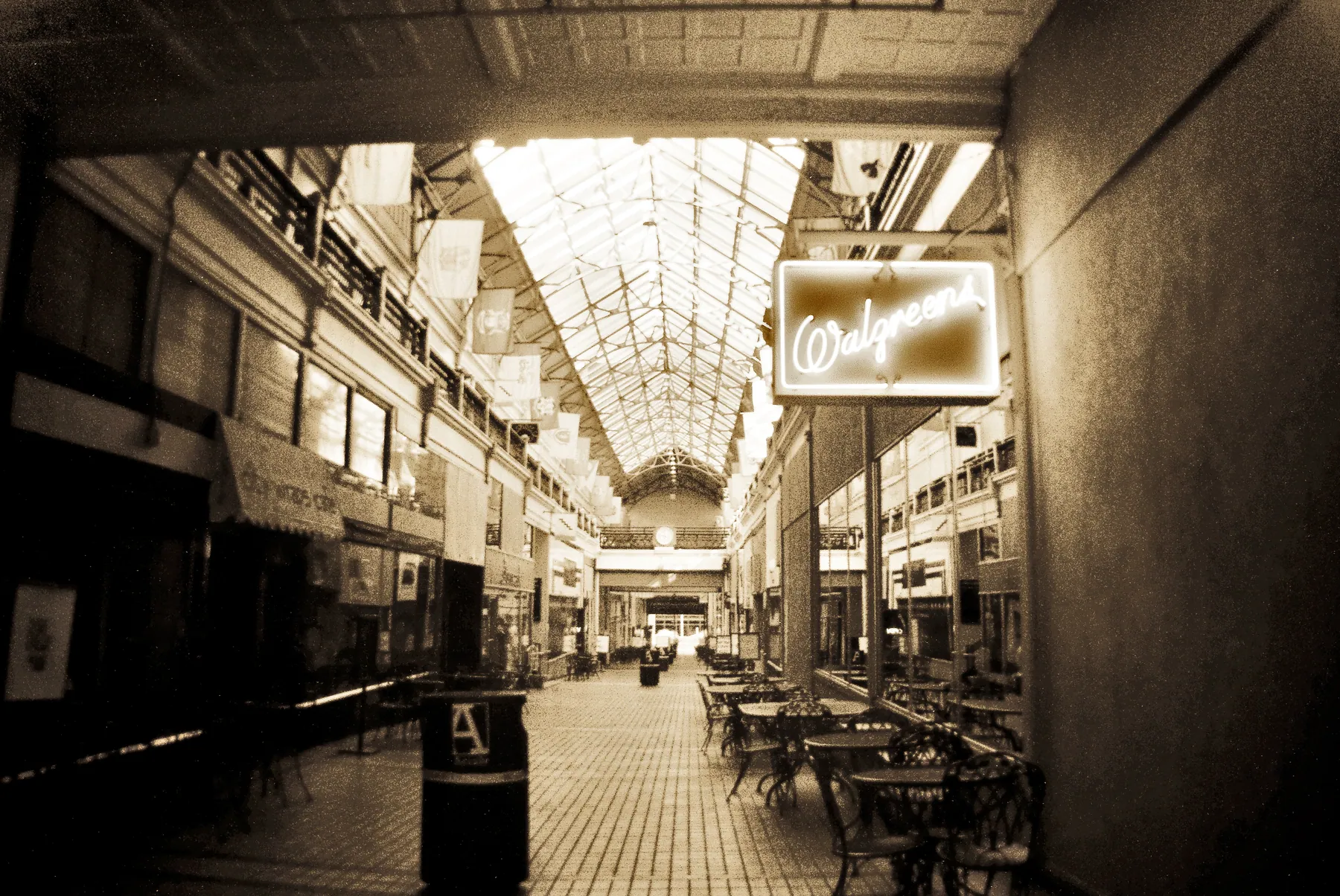
The Nashville Arcade
The Arcade is a covered, two-level shopping passage that runs between Fourth and Fifth avenues downtown, about a 4-minute walk from the lofts.
A First-Timer's Checklist for Nashville
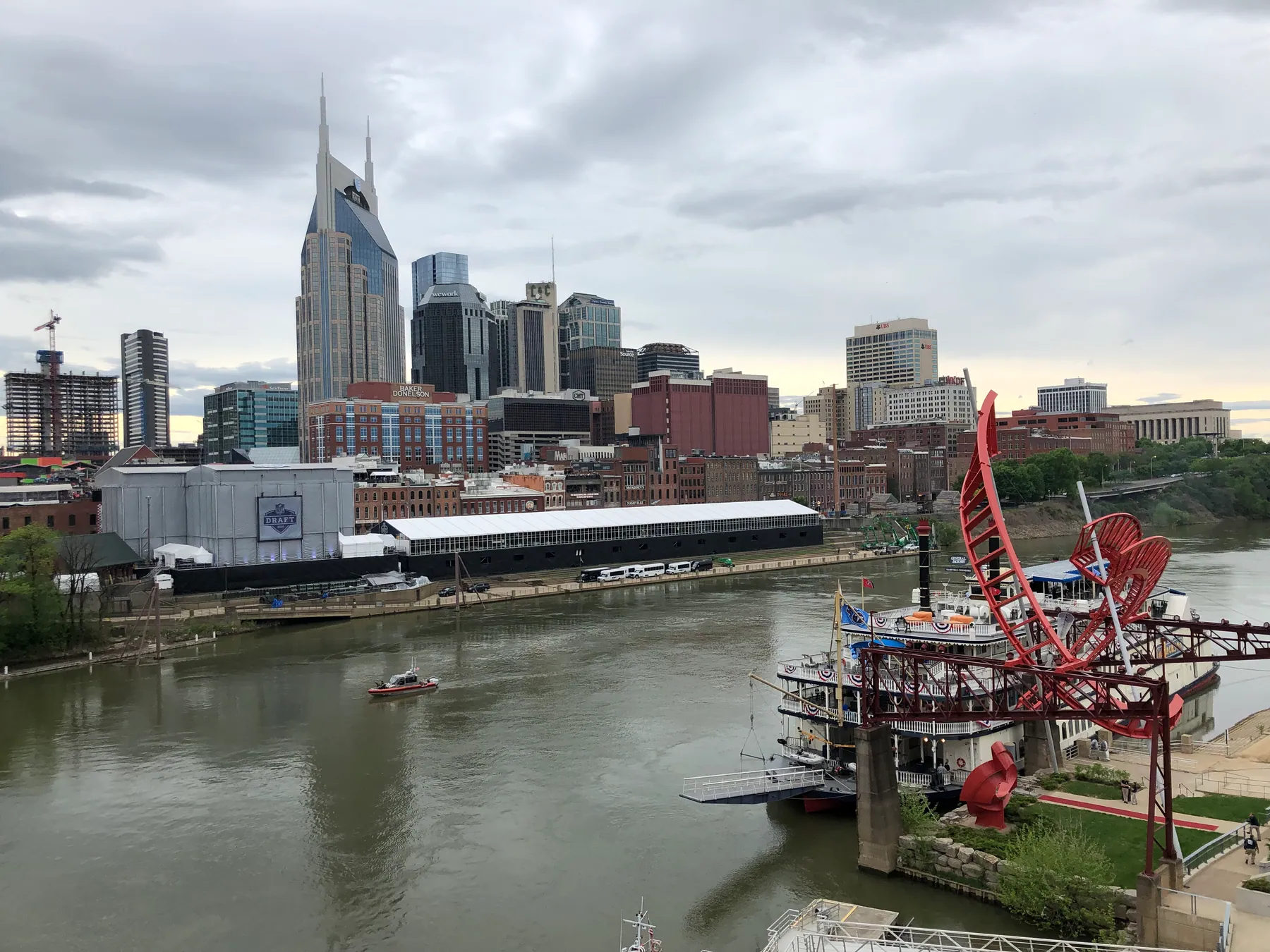
A first trip to Nashville goes smoother with a few things settled before you land: which shows to book, how to get in from the airport, what you can walk to, what to eat and what to pack.
The Studios of Music Row
Music Row is the district along 16th and 17th avenues south of downtown where Nashville's record business set up shop starting in 1954.